
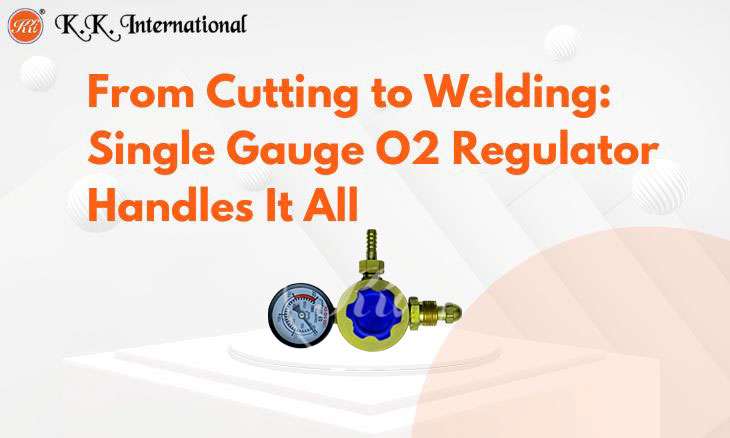
Why Rugged Brass Build Matters in a Single Gauge O2 Regulator
Here's a question worth asking before you buy any oxygen regulator: what's it actually made of, and does that material choice matter for what you're using it for?
Most people don't think about this. A regulator is a regulator, right? It shows pressure, you adjust a knob, gas flows out. Why would the material matter that much?
Turns out, with oxygen equipment specifically, material choice matters more than almost anything else about the product. Let's talk about why.
The Thing About Oxygen That Changes Everything
Oxygen itself doesn't burn. That surprises people sometimes. But oxygen makes everything else burn faster, hotter, and more aggressively than normal air would allow.
This single fact changes how you need to think about any equipment that handles oxygen, especially at high pressure. Materials that would be perfectly fine for, say, a water valve or an air compressor fitting, can become genuinely hazardous in oxygen service.
Specifically, contamination from oils, greases, or certain materials can cause what's called oxygen-enhanced combustion basically, things that wouldn't normally ignite suddenly can, and things that would burn normally burn far more violently in concentrated oxygen.
This is exactly why the construction material and manufacturing process for an oxygen regulator isn't just about durability. It's fundamentally about safety.
Brass earned its place as the standard material for oxygen equipment because it handles these requirements properly when manufactured and maintained correctly.
What "Rugged Brass Build" Actually Means in Practice
Let's get specific about what makes brass construction valuable for the Single Gauge O2 Regulator, beyond just saying "brass is good."
Resistance to the Specific Stresses of Oxygen Service
Oxygen cylinders are pressurized to seriously high levels often 150 bar or more. Your regulator experiences this full pressure at the inlet side every single time you connect it to a cylinder. That's substantial mechanical stress concentrated in a fairly small component.
Brass handles this pressure reliably. It doesn't deform under the load. It doesn't develop stress fractures from repeated pressurization and depressurization cycles. Connect, disconnect, connect again, hundreds of times over the regulator's working life brass construction maintains its integrity through all of it.
Machining Precision That Actually Matters for Safety
Here's something not everyone realizes: brass can be machined to extremely tight tolerances. This isn't just about looking nice or fitting together smoothly for oxygen equipment specifically, precise machining reduces the risk of trapped contaminants, ensures proper seating of internal components, and creates the consistent surfaces needed for reliable sealing.
Rough or imprecise machining can leave microscopic crevices where contamination might collect, or create uneven surfaces that don't seal as reliably. Quality brass machining for oxygen service components avoids these issues.
Corrosion Resistance Where It Counts
Workshop environments aren't always clean and dry. There's moisture in the air, sometimes chemical exposure from other processes happening nearby, temperature and humidity variations throughout the year.
Brass resists corrosion in these conditions far better than many alternative materials. A regulator that's corroding develops surface irregularities, potential leak paths, and general unreliability over time. Quality brass construction simply doesn't degrade this way under normal workshop conditions.
Temperature Stability
When high-pressure gas expands rapidly through a regulator, there's a cooling effect sometimes regulators get noticeably cold during heavy use. Conversely, workshop environments themselves can get genuinely hot, especially near welding and cutting operations.
Brass handles this temperature range without becoming brittle in the cold or losing structural properties in the heat. The material stays dimensionally stable and mechanically sound across the temperature swings it'll actually experience in real use.
Why This Matters More for Oxygen Than Other Gases
You might wonder why we're emphasizing this so heavily for an oxygen regulator specifically, when other gas regulators exist too.
The answer comes back to that combustion enhancement property of oxygen. With fuel gas regulators acetylene, propane, that sort of thing material failure or contamination issues create their own risks, certainly. But oxygen has this additional characteristic where contamination combined with high pressure and any ignition source can create combustion events that happen extremely fast and with surprising intensity.
This is why oxygen equipment manufacturing standards are particularly strict about materials, cleaning processes, and construction quality. It's not excessive caution it's matched to the actual risk profile of the application.
A rugged brass build isn't a premium feature for oxygen regulators. It's closer to a baseline requirement for equipment that's actually appropriate for the job.
The Manufacturing Process Behind Quality Brass Regulators
Let's talk about what actually goes into making a brass regulator body that performs the way it should, because understanding this helps you appreciate why quality varies so much between manufacturers.
Material Selection
Not all brass is identical. The specific alloy composition affects machinability, strength, and corrosion resistance. Quality manufacturers select brass alloys specifically suited for gas service applications rather than using whatever generic brass happens to be available cheaply.
Precision Machining
The regulator body needs internal passages, threaded connections, and seating surfaces for internal components — all machined to specific tolerances. This requires proper equipment, skilled operation, and quality control checking that the dimensions actually match specification consistently across production runs.
Cleaning for Oxygen Service
This step gets skipped or done poorly by lower-quality manufacturers, and it's genuinely important. Components for oxygen service need to be cleaned to remove any oils, greases, or other contaminants introduced during manufacturing or handling. Proper oxygen service cleaning follows specific procedures — not just a quick wipe down.
Assembly and Testing
Quality manufacturing includes pressure testing finished regulators before they ship. This confirms the unit actually holds pressure correctly, the gauge reads accurately, and there are no leaks at any connection point or seal within the regulator itself.
When any of these steps gets shortcut cheaper brass alloy, less precise machining, inadequate cleaning, skipped testing you end up with a regulator that might look similar to a quality one but performs and behaves quite differently in actual use.
What Workshop Professionals Actually Look For
I talked to an experienced welder who's worked across several industrial workshops over his career. His take on regulator selection was refreshingly simple: "I don't want to think about my regulator. I want to set my pressure, do my work, and trust that number is accurate the whole time."
That's really the entire point of rugged brass construction. It's not about flashy features or impressive specifications on paper. It's about creating equipment reliable enough that you can focus entirely on your actual welding or cutting work instead of wondering whether your equipment is behaving correctly.
He mentioned that early in his career, working with lower-quality regulators, he developed habits like constantly double-checking pressure readings and staying alert for subtle signs of equipment problems. With quality brass regulators, that mental overhead basically disappeared. The equipment just worked consistently, freeing up his attention for the actual skilled work of welding.
Why KK International's Approach to Brass Construction Matters
The Single Gauge O2 Regulator from KK International is built around the understanding that oxygen equipment construction quality isn't optional or just a premium feature it's fundamental to the product actually being appropriate for its intended use.
This means selecting proper brass alloys suited for gas service, machining to tolerances that support both function and safety, following cleaning procedures appropriate for oxygen service equipment, and testing units before they reach you to confirm actual performance rather than just assumed performance.
You're getting pressure accuracy that holds up over time, a rugged build that survives real workshop conditions, leak-proof design that doesn't develop problems after a few months, and universal fitment that connects properly to standard oxygen systems without compatibility headaches.
Making Your Decision
When you're comparing oxygen regulators, price is obviously a factor everyone has a budget. But for equipment in this specific category, where the application involves high pressure and a gas with genuine combustion-related risks if things go wrong, build quality deserves to be your primary consideration, not an afterthought.
A rugged brass build isn't just about the regulator lasting longer, though it does that too. It's about having equipment that performs predictably and safely throughout its working life, equipment you can actually trust when you're relying on it for work that matters.
The Single Gauge O2 Regulator from KK International: rugged brass body built for the actual demands of oxygen service, pressure accuracy that holds up through years of regular use, leak-proof design that doesn't develop problems over time, and universal fitment for standard HP oxygen systems across welding, cutting, and industrial workshop applications.


