
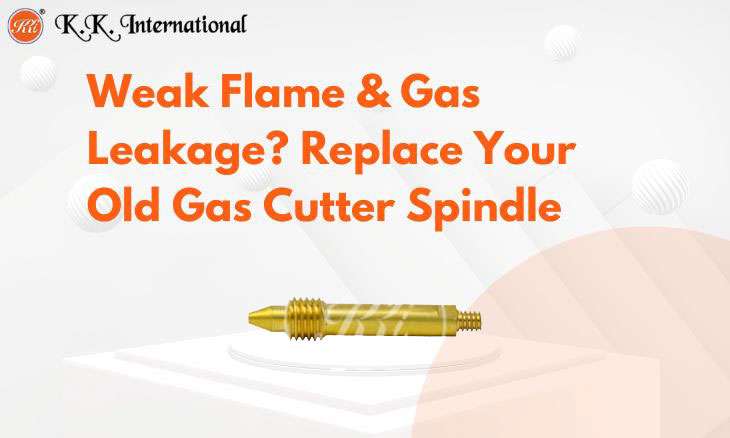
Brass vs. Cheap Metal: Why Spindle Material Actually Matters
Here's a question that probably sounds ridiculous at first: how much thought have you given to the spindle in your gas cutter?
I'm guessing not much. It's a small component, right? Just a little metal piece that connects things and lets your torch rotate. Seems pretty basic.
And that's exactly why so many people end up with cheap spindles that cause problems down the line. They figure "metal is metal" and grab whatever costs less.
Then six months later, they're dealing with wobbly torches, rough cuts, or spindles that corroded and seized up. And suddenly that small component doesn't seem so insignificant anymore.
The "Metal Is Metal" Myth
Let's clear something up right away: not all metals are the same. Not even close.
You've probably seen those cheap replacement spindles at supply stores. They're usually made from whatever metal was cheapest that week could be zinc alloy, could be low-grade steel, could be some mystery mix that nobody's quite sure about.
They look okay. They're shiny. They're cheap. What could go wrong?
Everything, actually.
Temperature Reality
Gas cutting generates serious heat. Your torch is literally using flame to cut through metal. Some of that heat transfers to the torch assembly, including the spindle.
Cheap metal alloys don't handle heat well. They expand inconsistently, warp slightly, lose their precision tolerances. Over time, this degrades performance. Your torch doesn't rotate as smoothly. The fit gets sloppy. Cuts become less precise.
Brass, on the other hand, has excellent thermal properties. It handles temperature cycling without losing its shape or compromising its function. The spindle your gas cutter came with was probably brass for this exact reason.
Corrosion Is Sneaky
Workshop environments are harsh. Moisture in the air. Occasional exposure to cutting fluids or oils. Temperature swings. Metal dust everywhere.
Cheap metal corrodes. Maybe not dramatically you won't see it rusting away overnight but gradually. The surface roughens. Moving parts don't slide as smoothly. Eventually, you get binding or seizing.
Brass naturally resists corrosion. It doesn't need coatings or treatments that wear off over time. The material itself just doesn't break down from normal workshop exposure.
Wear Patterns Tell the Story
Here's where material quality really shows up: wear patterns over time.
Cheap metal spindles wear unevenly. Soft spots in inconsistent alloys create grooves or flat spots. The precision fit you started with degrades into sloppy, imprecise connections.
Quality brass wears gradually and evenly. Even after years of use, brass spindles maintain reasonable tolerances. They don't suddenly develop play or looseness—they just slowly, predictably wear in ways you can plan for.
What Actually Happens with Cheap Spindles
Let me walk you through the typical lifecycle of a cheap spindle, because I've watched this play out too many times.
Month 1-2: Everything Seems Fine
The cheap spindle works. Your torch rotates. Cuts look decent. You're thinking "see? Saved money and it's working just fine."
Month 3-4: Subtle Changes
You start noticing the torch doesn't feel quite as tight. Maybe there's a tiny bit of play in the rotation. It's not bad enough to worry about, so you ignore it.
Month 5-6: Real Problems Start
Now the looseness is obvious. Your torch wobbles slightly during cuts. Precision suffers. You're compensating with technique, trying to work around the equipment instead of with it.
Month 7+: Replacement Time
The spindle is shot. Maybe it's corroded and binding. Maybe it's worn so loose that cuts are unacceptably rough. Either way, you're buying another spindle.
And if you buy another cheap one? The cycle repeats.
The Brass Spindle Difference
Brass spindles don't eliminate wear—nothing does. But they change how that wear happens and how long it takes.
Consistent Performance Over Time
A quality brass spindle maintains smooth rotation for years, not months. The material's hardness and durability mean wear happens gradually instead of rapidly.
You're not dealing with sudden degradation or surprise failures. The spindle works well, continues working well, and eventually (after much longer) needs replacement during normal maintenance cycles.
Temperature Stability
When you're doing production cutting work, your equipment heats up and stays hot. That's the environment spindles live in.
Brass handles this without dimensional changes that affect fit and function. Your torch assembly maintains its precision through long cutting sessions because the spindle isn't warping or expanding inconsistently.
Real Corrosion Resistance
Workshop atmosphere attacks metal. It's just reality. But brass stands up to it naturally.
You're not fighting corrosion with coatings or treatments. You're not dealing with surface degradation that roughens moving parts. The spindle just resists the environmental factors that destroy cheap alternatives.
Precision Manufacturing Standards
Here's something people overlook: quality brass spindles are manufactured to tighter tolerances.
The dimensions are more precise. The threading is cleaner. The fit is better from day one. That precision translates to smoother operation and longer functional life.
Cheap spindles might be "close enough" dimensionally, but that slop compounds into real problems quickly.
The Universal Compatibility Advantage
Quality brass spindles from manufacturers like KK International are designed for universal compatibility.
Standard torch and cutter systems. Multiple brands. Various configurations. A good brass spindle fits properly across different equipment without the compatibility headaches that generic cheap spindles sometimes create.
This matters if you have multiple cutters or work with different equipment. One quality spindle type handles everything instead of hunting for specific replacements for each piece of equipment.
The Bottom Line
If someone asked you "should I use quality materials for the components that determine my gas cutter's precision?" you'd probably answer "obviously yes."
But somehow when it comes to actual purchasing decisions, price tags blur that obvious answer. Cheap looks appealing until you've lived with the consequences.
Brass spindles work better, last longer, maintain precision reliably, and resist the environmental factors that destroy cheap alternatives. That's not opinion that's material science.
The Brass Spindle from KK International: precision-manufactured for accurate fit and function, brass construction for temperature stability and corrosion resistance, universal compatibility with standard torch and cutter systems, and built to maintain performance through years of professional use.


