
Cutter Head Nut Buyer's Guide: Avoiding Common Mistakes
You know what's funny? Most people spend hours researching which gas cutter to buy, comparing brands and features and prices. Then they need a replacement cutter head nut and just grab whatever's cheapest without a second thought.
I get it. It's a tiny brass nut. How much does it really matter?
Well, I've got a friend who runs a fabrication shop. Guy was going through gas cylinders like crazy, couldn't figure out why. Blamed his crew for being wasteful. Blamed the supplier for undersized cylinders. Blamed everything except the actual problem.
Turned out? His cutter head nuts were leaking. Not dramatically just these tiny, constant leaks that added up to hundreds of dollars in wasted gas every month.
One small, cheap component cost him way more than just buying the right one would have.
What Actually Separates Good from Garbage
Okay, so what's the real difference? Let me walk you through what actually matters, because nobody explains this stuff clearly.
Threading That Actually Seals
The threads on your cutter head nut need to match your cutter head perfectly. And I mean perfectly not "eh, close enough."
Good manufacturers use precision equipment to cut threads to exact specifications. Every single nut matches the standard, consistently.
Cheap manufacturers? They're cutting costs everywhere. Their threading might be slightly off-pitch. Maybe the depth varies a bit between pieces. Perhaps the thread angle isn't quite right.
Will it still thread on? Sure. Will it seal properly? That's hit or miss.
And here's the kicker you can't tell by looking. The threading looks fine. It feels okay when you screw it on. But there are microscopic gaps that let gas escape slowly but constantly.
I've seen guys tighten these things until they practically strip the threads, thinking if they just crank it down hard enough it'll seal. Doesn't work that way. Bad threading is bad threading, no matter how much torque you apply.
The Brass Actually Matters
Not gonna lie, before I really understood this stuff, I thought brass was brass. Turns out there's a huge range in quality depending on the alloy composition.
Good brass for gas fittings needs to hit this sweet spot. Hard enough that it doesn't deform when you tighten it, but not so brittle that it cracks under stress. Resistant to corrosion from whatever gases you're running through it. Stable across temperature changes.
Cheap brass is whatever the manufacturer could get at the lowest price. Maybe it's too soft you tighten the nut properly and it deforms, ruining the seal. Maybe it's too brittle and develops hairline cracks you can't even see. Maybe it corrodes faster than it should.
The annoying part? You genuinely cannot tell brass quality just by looking at it. A cheap nut and a quality nut can look identical. You only find out which one you got when it either works or doesn't.
Dimensions Need to Be Spot-On
This is another thing I learned the hard way. Cutter head nuts need to be manufactured to really specific dimensions. Wall thickness, sealing surface flatness, overall sizing it all matters.
Quality manufacturers have tight quality control. Every piece meets spec because that's how their process works.
Budget manufacturers have more variation. Some pieces from the batch might be fine. Others might be borderline. And you're basically playing roulette with which one ends up in your hand.
I've bought cheap nuts before where I could feel the difference between two supposedly identical pieces. One threaded on smoothly, the other felt rough. That's inconsistent manufacturing, and it's a bad sign.
The Heat Problem Nobody Warned Me About
So here's something I wish someone had told me earlier: gas cutting gets HOT. Like, obviously the metal you're cutting gets hot, but everything in the system heats up too.
Your cutter head isn't just sitting there at room temperature. During extended cutting sessions, the whole assembly including that little nut is experiencing serious thermal stress.
Cheap nuts might work fine when everything's cold. But as things heat up, problems appear. The brass might soften slightly, losing clamping force. Thermal expansion might create gaps that weren't there before. Seals that held at room temperature start failing when hot.
I used to have this issue where my connections would be fine at the start of the day, then I'd start noticing gas smell after an hour of work. Thought I was going crazy. Turns out the cheap nuts I was using couldn't handle the temperature cycling.
Quality cutter head nuts are manufactured with this in mind. The brass composition stays stable when hot. The design accounts for thermal expansion. You're not constantly re-tightening connections mid-job.
The Compatibility Mess
"Universal fit" sounds great in theory. In practice? It's complicated.
Different cutter head brands have slightly different specifications. The threading might be close but not identical. The sealing surfaces might be shaped a bit differently. And a nut that's "universal" might technically fit everything but not seal perfectly on anything.
I've made the mistake of assuming "standard threading" means everything's actually standardized. It's not. There's enough variation between brands that compatibility really does matter.
What I do now: I verify that the nut is actually compatible with my specific cutter head brand, not just marketed as universal. If I can test-fit before I need it urgently, even better.
Because finding out your "universal" nut doesn't actually seal properly on your equipment? That's a frustrating discovery when you've got work waiting.
The KK International nuts work across multiple brands because they're manufactured to actual precise specifications, not just "close enough to fit most things."
Let's Talk About Safety for a Second
Look, I know nobody wants to be the safety lecture guy, but gas leaks aren't something to mess around with.
A tiny leak might seem like no big deal. You smell a bit of gas, maybe lose some cylinder capacity, whatever. But in a workshop environment? That's fuel + oxygen + any random spark or hot surface. The risk adds up fast.
And what makes this worse cheap cutter head nuts often develop intermittent leaks. They don't leak constantly, so you might not even notice. They leak when they're hot, or under certain pressures, or after they've worn down a bit.
So you think your equipment is secure. You've checked it, everything seems fine. But there's this developing problem that you won't know about until something goes wrong.
I'm not trying to be dramatic here. I'm just saying for the price difference we're talking about, why take the risk? This is one component where saving 100 rupees makes absolutely no sense compared to the potential consequences.
What the Old-Timers Know
Every experienced fabricator or welder I've talked to has basically the same story. They started out buying cheap components, dealt with all the problems I just described, maybe had a close call that scared them, and now they only use quality parts for gas systems.
Not because they suddenly got rich and don't care about costs. Because they learned that cheaping out on gas fittings is actually more expensive in the long run.
The pros who run efficient, safe shops? They stock good cutter head nuts and replace them proactively. They don't wait for failures. It's just part of running things properly.
Making the Smart Decision
Buying cutter head nuts doesn't have to be complicated. Once you know what matters, it's pretty straightforward.
Get brass that's actually manufactured for gas applications, with proper heat and corrosion resistance.
Make sure the threading is precision-cut for reliable sealing with your specific equipment.
Buy from manufacturers who have real quality standards, not whoever's sourcing the cheapest components available.
And remember this is a fitting in a system with pressurized flammable gas. The potential cost of it failing is way, way higher than the cost of buying quality to begin with.
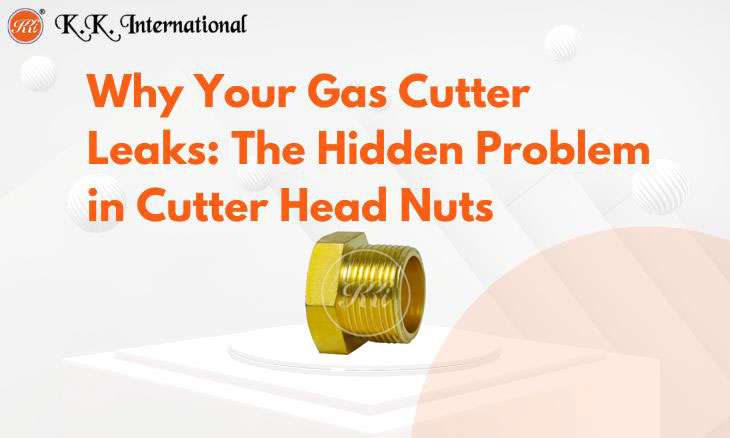
The KK International Cutter Head Nut is what quality looks like in this component: precision brass construction that actually seals properly, high-temperature resistance for real cutting conditions, compatibility with standard cutter heads because dimensions are maintained accurately, and manufacturing that prioritizes safety and performance over cutting costs.
When you buy a cutter head nut, you're not really buying a small brass fitting. You're buying confidence that your gas connections won't leak, won't fail, and won't create safety problems.


