
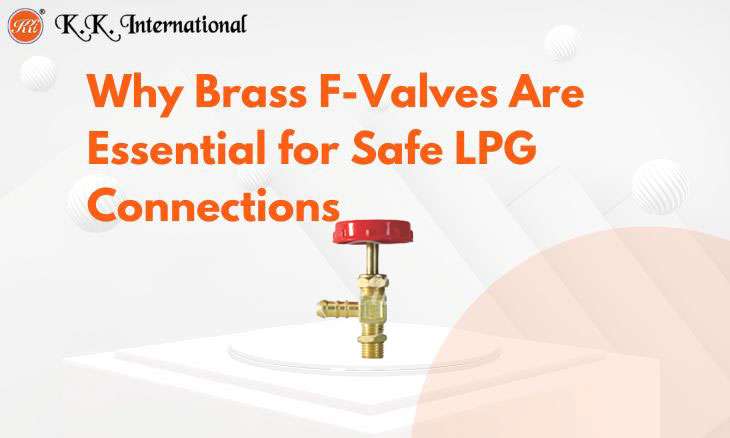
Why the F-Valve (Single Hose) Belongs in Every Gas Setup
You ever have that moment where you smell gas and your stomach just drops?
Maybe you're in your workshop, just fired up the cutter, and there's this faint smell. Or you're at home and something just doesn't smell right near the LPG connection. Your brain immediately goes into alert mode because you know gas leaks are serious business.
And here's what gets me: nine times out of ten, when there's a leak at a connection point, it's because someone used a cheap fitting thinking "it's just a small part, how much could it matter?"
Turns out? A lot. It matters a lot.
Why We Treat Gas Fittings Like They Don't Matter
I genuinely don't get it. People will spend thousands on equipment, hundreds on proper hoses and regulators, and then... grab whatever random fitting is lying around. Or worse, buy the absolute cheapest one available because "they're all the same anyway."
But they're not all the same. Not even close.
Think about it this way: if your water pipe leaks, yeah it's annoying. You get wet. Maybe some water damage. Your bill goes up a bit. You fix it when you get around to it.
But a gas leak? That's a completely different conversation. We're talking fire. Explosions. People getting hurt. Properties getting damaged. In worst cases, people dying.
Yet somehow we're more careful about choosing which brand of milk to buy than which gas fitting to use. It makes no sense.
What Actually Makes a Good LPG Fitting
The F-Valve (Single Hose) from KK International isn't trying to reinvent the wheel here. It's just doing what every gas fitting should do and most cheap ones don't.
The Brass Actually Matters
Okay, so all these fittings look like brass, right? They're all that same gold-ish color. Must be basically the same thing.
Wrong. So wrong.
Cheap brass has all sorts of problems you can't see just by looking at it. Impurities in the metal. Inconsistent composition. Weak spots that develop into cracks over time. And when you're dealing with pressurized gas, those weaknesses become serious problems.
Good brass the kind used in the F-Valve is engineered specifically for gas applications. It handles pressure. It doesn't corrode when exposed to LPG. It doesn't develop stress fractures that turn into leak points.
I know this sounds boring, but the metal composition literally determines whether your fitting works for two months or twenty years. That's not exaggeration that's just material science.
Sealing That Actually Seals
Here's something I learned the hard way: with gas fittings, there's no such thing as "good enough."
Either it seals completely, or it leaks. There's no middle ground. "Mostly sealed" means "leaking."
The F-Valve (Single Hose) has threading that's actually cut to proper standards. Not "close enough" standards. Actual specifications that match standard LPG hose connections. The internal design seats properly. The manufacturing tolerances don't leave gaps where gas can escape.
When you install this thing correctly proper sealant, proper tightening it seals. Period. Not "it should seal" or "it usually seals." It seals.
And you know what? That peace of mind is worth way more than whatever you'd save buying cheaper fittings.
Heat Doesn't Mess It Up
LPG systems get hot. Really hot. If you're using a gas cutter or torch, there's serious heat involved, and some of that radiates back through the gas lines.
Cheap fittings? They can actually deform when they get hot. The brass softens, the seal gets compromised, and suddenly you've got a leak in the worst possible place right where there's heat and potential ignition sources.
The F-Valve is built to handle high temperatures without losing its integrity. The brass composition stays stable. The seal stays tight. It just keeps working even when things get hot.
Where People Actually Use This
Workshop Setups
If you've got a fabrication shop or you're doing any metalwork, your gas cutter is probably one of your most important tools. And a gas leak in a workshop surrounded by sparks, hot metal, open flames that's nightmare fuel.
The F-Valve (Single Hose) is what you want connecting your LPG supply to your equipment. Not because it's fancy, but because it just works reliably without creating safety hazards.
Install it once, and it's done. You're not constantly checking for leaks, not replacing failed fittings every few months, not wondering if today's the day something goes wrong.
Home LPG Systems
This one hits different because we're talking about where you live. Where your family lives. A gas leak at home isn't a work problem you deal with during business hoursit's a safety issue in your living space.
I don't care how small your home LPG setup is. Could be just one burner. Doesn't matter. Your family's safety doesn't have different tiers based on system size.
Quality fittings like the F-Valve mean you're not dealing with gas smells, panic calls to gas companies, or lying awake wondering if everything's okay. The system just works safely, which is literally the bare minimum requirement for home gas installations.
Industrial Environments
Big industrial setups usually have multiple connection points throughout the gas distribution system. Each connection is a potential failure point. And when you're running high-volume operations, even small leaks waste serious money.
The F-Valve's reliability across all those connection points means the system runs safely and efficiently without needing constant maintenance attention.
Plus, industrial safety regulations are no joke. Failed fittings can shut down operations until issues are fixed. Using proper components from the start avoids that entire mess.
Professional Installations
If you're a gas fitter, plumber, or contractor, every installation has your name on it. When something leaks, when there's a safety callback, that reflects on you professionally.
Using premium fittings like the F-Valve (Single Hose) protects your reputation. Your installations stay leak-free. Your customers stay safe. You sleep better at night knowing your work isn't creating hazards.
What Professionals Actually Do
I know a gas fitter who's been doing commercial and industrial work for like seventeen years. He's installed thousands of connections. Seen every brand, every price point, every type of fitting imaginable.
These days? He only uses premium brass fittings from proven manufacturers. No exceptions. Doesn't matter if a client pushes back on cost.
His explanation: "Every installation has my license number attached to it. If there's a leak, if someone gets hurt, that's on me legally and professionally. I'm not risking everything to save a client a few thousand rupees on fittings."
That's the professional mindset. When safety is critical and your reputation is on the line, you don't compromise on components. You use what works.
Time to Stop Cutting Corners?
If you're still grabbing whatever random gas fitting happens to be available, if you've had to deal with leaks before, if you're ready to actually stop worrying about gas safety maybe it's time to use components that are actually built right.
LPG systems need fittings designed for gas service. Manufactured to proper standards. Built to last and keep people safe.
The F-Valve (Single Hose) from KK International: premium brass that resists corrosion and lasts decades, leak-proof design that actually seals completely, high-temperature resistance for demanding applications, universal compatibility with standard LPG systems, and built to professional standards without compromises.


