
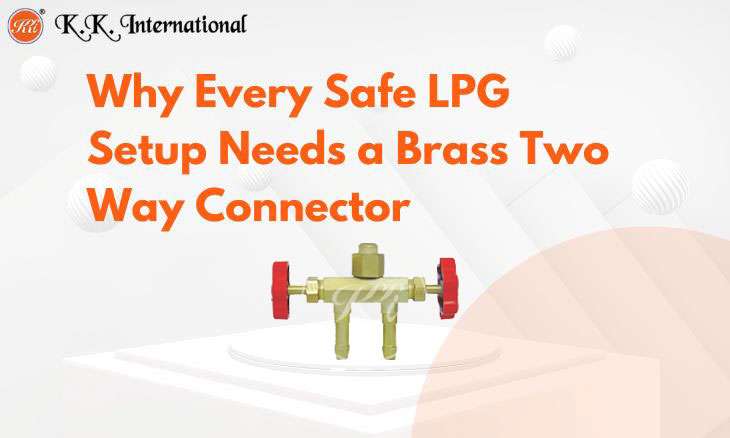
The Two Way Connector That Won't Compromise on Safety
Look, I need to talk to you about LPG connections for a minute. And yeah, I know it's not the most exciting topic, but hear me out.
We're dealing with pressurized gas that can literally explode. Not water that just makes a mess on your floor. Not compressed air that wastes some electricity. We're talking about actual flammable gas running through your pipes.
And somehow, people still treat LPG fittings like they're buying toilet paper whatever's on sale, whatever's closest, whatever's cheap. Just grab it and hope it works out.
That's insane when you actually think about it.
The "It'll Probably Be Fine" Approach
I've watched this happen so many times it's basically predictable now.
Someone's setting up a kitchen with multiple gas burners. Or they're running gas to a few different tools in their workshop. They need to split the LPG line, so they need a two-way connector.
Off to the hardware store. Grab whatever brass fitting is there. It's got threads, it's cheap, looks like it should work. Screw it in, turn on the gas, nothing's hissing. Great, we're done here.
Fast forward a few months. There's this weird smell sometimes. "Probably nothing." A few more months, someone notices the connection feels loose. "I'll tighten it later." Maybe a year down the road, there's visible corrosion and an actual leak.
Now you're not just dealing with a simple fitting anymore. You've got a genuine safety problem that could've been avoided by spending a bit more from the start.
Why Gas Is Different (Obviously)
This should be obvious, but apparently it needs saying:
Water leak? Annoying. You get puddles, maybe some water damage if it's bad. Not great, but manageable.
Air leak? Wasteful. Your compressor runs more, you're losing efficiency. Kind of irritating, not dangerous.
Gas leak? You've now introduced flammable gas into your space. This is a whole different level of problem. This is "your house could catch fire" level of problem.
So why would you treat gas fittings the same way you treat water fittings? It makes no sense.
The Two Way Connector from KK International is made by people who understand that gas fittings failing isn't just an inconvenience it's a genuine hazard.
What Actually Makes a Gas Connector Safe
Alright, let's get into specifics. What separates a safe LPG connector from one that's just rolling the dice?
Threading That Actually Creates a Seal
LPG connections depend on precise threading to seal properly. But not all threading is created equal not even close.
Cheap fittings? The threading's kind of rough. Maybe it's a bit loose in spots, maybe the tolerances are off. You tighten it down and it seems okay at first. But there are tiny gaps, microscopic spaces where pressurized gas can squeeze through.
The Two Way Connector has threading that's actually cut to spec. Not "eh, close enough" spec actual standards. When you install it properly with the right sealant, you get a real seal. One you can count on, not one you're hoping holds.
This matters because LPG doesn't just sit there passively it's under pressure, constantly pushing against every connection point looking for a way out.
Brass That Won't Fall Apart
Here's something most people don't know: LPG has trace amounts of sulfur and other stuff in it. Over time, this corrodes brass fittings. Well, it corrodes cheap brass fittings. Good brass handles it fine.
Low-quality brass breaks down. It develops weak spots. Eventually, those weak spots become leak points or complete failures.
The brass in the Two Way Connector is specifically chosen for gas applications. It's not just "we had some brass lying around, let's use that." It's engineered to resist the specific type of corrosion that LPG causes.
Handling Heat Without Failing
LPG systems get hot. Stoves, ovens, industrial burners, workshop tools they all generate heat that radiates to nearby fittings. Your connector needs to maintain its seal when temperatures rise, not start warping or loosening.
Cheap fittings? They can deform slightly when heated. Just enough to compromise the seal. Just enough to start leaking.
The Two Way Connector maintains its specs across the actual temperature range it'll encounter in real use. Not lab conditions real kitchens, real workshops, real operating environments.
Built Right From the Start
Some manufacturers look at every component as a place to cut costs. Thinner walls saves material. Simpler design faster production. Minimal quality control saves time.
These shortcuts aren't visible when you're buying the fitting. You find out about them later when the fitting fails six months into use.
The Two Way Connector is engineered without taking those shortcuts. Proper wall thickness, solid internal design, manufacturing that maintains consistency. Not flashy stuff, just fundamental reliability.
Where This Actually Matters
Your Home Kitchen
If you've got multiple gas appliances at home burners, oven, water heater you're probably splitting LPG lines. This is your house. Where your family lives. Where you cook food.
Using quality gas connectors isn't being paranoid or wasteful. It's basic common sense. The downside of a gas leak at home is way too serious to gamble on cheap components.
Commercial Kitchens and Restaurants
Restaurants run multiple gas appliances hard, all day long. A gas leak isn't just a safety issue it shuts down business. It creates liability. It puts staff and customers at risk.
Commercial kitchens can't mess around with questionable fittings. They need components that work reliably under constant heavy use. The Two Way Connector provides that.
Workshop Setups
Workshops with gas cutting gear, welding equipment, industrial burners these spaces have ignition sources everywhere. A gas leak in a workshop environment is extra dangerous because there's so much that could spark it.
You need connectors that won't fail, period. The Two Way Connector is built for these demanding setups where failure isn't an option.
DIY Home Projects
Even if you're just setting up a small home workshop with a couple gas tools, safety doesn't scale down. A gas leak in a small space is still a gas leak.
And DIY folks especially need reliable components because they might not recognize early warning signs that a fitting's starting to fail.
Time to Stop Taking Risks?
If you're using random LPG fittings because they were cheap and available, if you've been lucky so far but know you're taking unnecessary chances, if you'd sleep better knowing your gas connections are actually safe maybe it's time to use components actually built for this.
LPG safety isn't about being overly cautious or paranoid. It's about matching your components to the reality of working with pressurized flammable gas.
The Two Way Connector from KK International: precision threading that creates actual leak-proof seals, LPG-specific brass that resists corrosion and stays intact, temperature resistance for real-world conditions, fits standard 3/8" connections universally, and built specifically for gas safety not just adapted from general fittings.


