
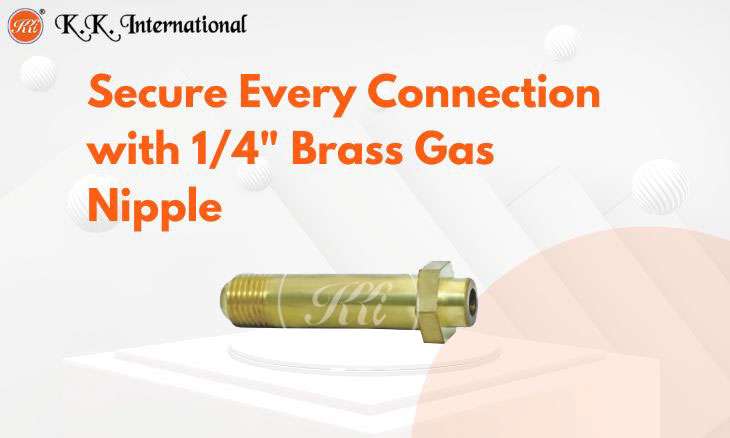
Where Strength Meets Precision: 1/4" Gas Nipple
When you're working with gas cutting systems, there's no room for shortcuts. Every component matters, and some matter more than you might think. Take the brass gas nipple, for instance. It's small, it's simple, and honestly, most people don't give it a second thought until something goes wrong.
But here's the thing: this little fitting is actually one of the most critical parts of your entire gas system. Let me explain why.
Why Brass? Why Not Something Else?
Good question. Steel is stronger, right? Plastic is cheaper. So why does brass dominate the gas fitting market?
The answer is pretty straightforward once you understand the science. Brass gives you the best of multiple worlds. It's strong enough to handle the pressure and stress of gas systems, yet it's malleable enough to create those tight, leak-proof seals that keep you safe.
Corrosion resistance is another huge factor. Walk into any older workshop, and you'll see rusted steel fittings that should've been replaced years ago. Brass? It just keeps going. Sure, it might develop some patina over time, but that doesn't affect its performance. The threads stay clean, the seal stays tight, and you can sleep easy knowing your connections aren't degrading.
There's also the temperature factor. Gas cutting operations get hot—really hot. Brass handles these temperature swings like a champ. It won't become brittle in the cold or lose its integrity when things heat up. That thermal stability is worth its weight in gold when you're working on critical projects.
Understanding the 1/4" Standard
Size matters in gas fittings, and 1/4" has become the industry standard for good reason. It's the Goldilocks zone not too big, not too small, just right for most gas cutting applications.
This standardization means you're not hunting around for specialty adapters or custom fittings. Your gas cutter, your hoses, your regulators they all speak the same language. Walk into any welding supply shop, and 1/4" fittings are what you'll find stocked on the shelves.
For workshop owners, this universal compatibility is a lifesaver. You can mix and match equipment from different manufacturers without worrying about whether things will fit together. Need to replace a hose? Upgrading your torch? Adding another cutting station? The 1/4" standard has you covered.
What Makes a Quality Brass Nipple Different?
Here's where things get interesting. Not all brass nipples are created equal, and the differences matter more than you might expect.
Precision engineering is the name of the game. The threading needs to be exact not close, not pretty good, but exact. When threads are cut properly, you get that smooth, confident feel when you're screwing fittings together. No cross threading, no forcing, no guesswork.
The brass quality itself varies wildly across manufacturers. Premium brass has the right balance of copper and zinc, giving you optimal strength and corrosion resistance. Cheap brass? It might look similar on the surface, but it can be brittle, prone to cracking, and might not hold up under the stresses of regular use.
KK International's 1/4" brass nipple (Code: GPN-4) represents the kind of manufacturing quality that professionals look for. These aren't mass produced afterthoughts they're precision engineered components designed specifically for demanding gas system applications.
One of the frustrations with specialized equipment is when you're locked into one manufacturer's ecosystem. Fortunately, the 1/4" brass nipple doesn't play that game.
These fittings work with virtually every major brand of gas cutting equipment. Victor, Harris, Smith, you name it the standard sizing means you can integrate these nipples into any system. This flexibility is invaluable when you're working with mixed equipment or upgrading components piecemeal.
Universal compatibility also means easier troubleshooting. If you're having issues with a connection, you can swap in a fresh nipple to test whether the fitting was the problem, all without worrying about brand-specific requirements.
In the grand scheme of your workshop setup, a brass gas nipple might seem insignificant. But that's exactly why it's so important to get it right. The components we take for granted are often the ones that matter most.
Strength and precision aren't opposites in the best brass fittings, they work together. The strength to handle pressure, resist corrosion, and withstand temperature extremes. The precision to create perfect seals, maintain thread integrity, and deliver consistent performance.
That's what you're really buying when you choose a quality 1/4" brass gas nipple. Not just a fitting, but a commitment to doing things right. And in a workshop environment where safety and reliability aren't optional, that commitment matters more than ever.
Your gas cutting system is only as good as its weakest link. Make sure that link is forged from quality brass, precision engineered, and built to last. Your work and your safety deserve nothing less.


