
Stop Guessing: Getting Accurate Tyre Pressure Every Time
Most people check tyre pressure the same way they check a weather forecast, roughly, and only when something already feels wrong. The tyre looks a bit flat, so out comes whatever gauge is lying around, and the number it gives back gets trusted without much thought. Problem is, a lot of that guesswork comes from the tool itself, not from the person using it.
A rigid, awkward gauge that barely reaches the valve properly is going to give you an inconsistent reading more often than people realize. And once you're working off bad numbers, every decision after that, whether to add air, how much, when to stop, is basically a guess wearing the disguise of a measurement.
Why "Close Enough" Isn't Actually Close Enough
Tyre pressure isn't one of those things with a wide margin for error. A few PSI off in either direction changes how the tyre grips the road, how evenly it wears down, and how much fuel the vehicle burns getting from one place to another. Over months, that small gap compounds into real cost, uneven tread wear, worse handling in wet conditions, and a tyre that ages faster than it should.
The frustrating part is that most of this isn't caused by neglect. People genuinely do check their tyres. They just check them with a gauge that can't get a clean, flush connection to the valve every time, so the reading shifts slightly depending on the angle they're holding it at. That's not user error, that's a tool limitation.
Where the Guesswork Actually Starts
Go stand next to any car with the valve stem tucked behind a wheel spoke or angled oddly against the rim, and you'll see the problem immediately. A stiff, straight gauge forces you to contort your hand or press at an angle that doesn't seal properly against the valve. Air hisses out during the check itself, the reading jumps around, and you end up re-checking two or three times just to get something you trust.
Bikes make this worse. Truck valves, worse still, often positioned in spots that basically require a specific angle to reach cleanly. A gauge that only works well in ideal, head-on conditions is going to fail you precisely in the situations where accuracy matters most.
This Is Exactly What a Flexible Hose Fixes
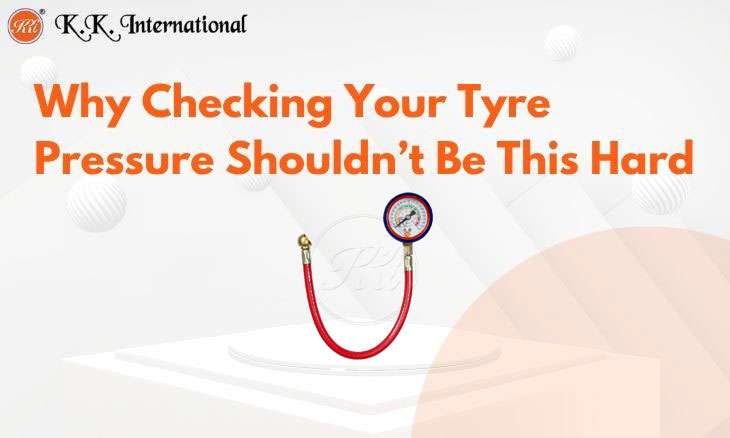
The Flexible Pressure Checking Gauge solves this problem in the most direct way possible, by letting the hose do the bending instead of your wrist. A flexible connection reaches valves at whatever angle they happen to sit at, tucked behind a spoke, angled oddly on a rim, buried in a tight wheel well, without forcing a loose, leaky connection just to get a reading.
That flush seal is really the whole story here. Once the connection is solid and steady instead of rushed and crooked, the reading you get back actually reflects the tyre, not the awkward angle you were forced to check it from.
One Tool, Every Vehicle, No Swapping Around
Garages and workshops deal with a mix of vehicles on any given day, cars, bikes, light trucks, and switching between different gauges for each one just adds friction to an already repetitive task. A gauge built to fit standard valves across all of these means one tool genuinely covers the whole job, no digging through a toolbox for "the bike one" versus "the truck one."
For personal use, this matters just as much, maybe more. Most people only own one pressure gauge, so it needs to actually work reliably across whatever vehicles are sitting in the driveway, not just the one it happened to be designed around first.
Durability Matters More Than People Expect
A gauge that gets used daily, in a garage environment especially, takes a beating that a lot of cheaper tools just aren't built to survive. Dropped on concrete, left in a toolbox with sharper metal parts, exposed to grease and grime constantly. A flimsy build shows its age fast, and a gauge that's lost its accuracy from wear and tear is arguably worse than no gauge at all, because now you're trusting a number that's quietly wrong.
A durable, robust build is what keeps the readings consistent over years of regular use, not just the first few weeks out of the box. That's really the difference between a tool you reach for without thinking and one you've stopped trusting.
Making Accurate Checks an Actual Habit
Accuracy only matters if the checking itself happens regularly, and a gauge that's awkward to use quietly discourages that habit without anyone really noticing. If reaching the valve is a small hassle every time, pressure checks start happening less often, maybe once a month instead of every couple weeks, and tyres slowly drift out of their ideal range in between.
A gauge that's quick and easy to use removes that friction entirely. Check becomes a fifteen-second task instead of a mildly annoying one, and that's really what turns "I should check my tyres soon" into something that actually happens on a regular basis.
Getting This Right the First Time
Good tyre maintenance isn't really about effort, it's about having a tool that doesn't fight you every time you use it. The Flexible Pressure Checking Gauge is built around that exact idea, a flexible hose that reaches every valve properly, a durable build that holds its accuracy over time, and a design simple enough that checking pressure stops being a task you put off.
If you're tired of inconsistent readings or wrestling with a gauge that never quite seals right, it might be time to stop blaming the habit and start looking at the tool.
Looking for a reliable, flexible pressure gauge for your garage or personal use? Reach out to the KK International team, they can help you find the right fit for your needs.


