
Cutter Head Wearing Out? Here’s What Changes in Your Cuts
Three pieces into the day and the cut just isn't right anymore. Edges rougher than usual. Flame doing something slightly off. You slow down to compensate, not even sure why yet. Most people blame the gas mix first. Or the pressure settings. Or just chalk it up to a bad day and move on. Half the time it's neither of those things. It's the cutter head, worn down quietly, dragging the whole job behind it without ever announcing itself.
This part doesn't fail with a bang. It fails slowly, a slightly rougher edge here, a cut that takes a beat longer to start there, until one day the job that used to wrap up in an hour is somehow pushing past two, and nobody can quite explain why.
The Small Stuff Adds Up Before You Notice
A worn cutter head doesn't quit overnight, it just degrades. The flame pattern shifts a touch, the cut hesitates slightly before it bites, edges come out a little rougher than they should. None of that on its own is screaming for a replacement. It just reads as a minor annoyance, something you work around without much thought.
Stack that across a full shift of cutting though, and it's real time gone. A few extra seconds here, a bit more cleanup there, a little more fuel burned to get the same result you used to get faster. Nothing dramatic in the moment. But across dozens of cuts in a day, it turns into a job running noticeably longer than it has any reason to.
Rough Cuts Create More Work, Not Less
This is where it really bites into a schedule. A worn head doesn't just slow the cutting down, it pushes extra work further down the line too. Rougher edges usually mean more grinding or finishing afterward, work that simply wouldn't exist with a head that's actually performing the way it should.
Tight tolerance jobs feel this even harder. An inconsistent cutter head means more rejected pieces, more re-cuts, more wasted material trying to salvage something usable out of a head that's already past its prime. All of that gets tacked right back onto a job that was supposed to be done hours ago.
Why It Creeps Up Instead of Hitting All at Once
Cutter heads wear from repeated heat and daily use, and that wear doesn't exactly announce itself. Brass holds up a lot better than cheaper materials, sure, but even good brass has a working lifespan, and once it starts going, performance drops off in small, easy-to-miss increments rather than failing outright.
Which is exactly why it's so easy to keep running a worn head for weeks without clocking that it's the actual bottleneck. You tweak your technique a little, work around the rougher cut, and start assuming that's just how the job goes now. Meanwhile the real fix has been sitting right there the whole time, nobody's just looked at it yet.
What a Head That Actually Works Saves You
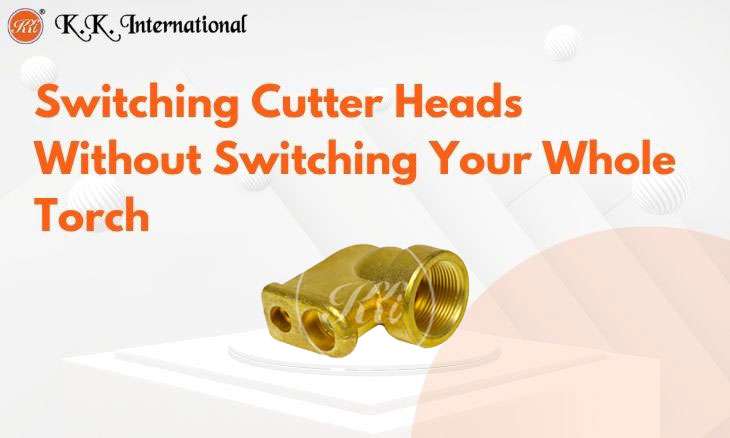
A reliable cutter head, like the one from KK International, keeps the flame pattern steady and the cut accurate from the first piece all the way through the last. That's really where the time savings come from, nothing dramatic or flashy, just every cut behaving the way it's meant to, without needing extra adjustment or cleanup tacked on afterward.
Over a full day, or a full week of production, that kind of consistency adds up fast. Less time spent compensating for a bad cut. Less material wasted on rejects. Less finishing work piling up at the end of every piece. Not exciting stuff, but it's exactly what keeps a job on schedule instead of quietly slipping behind without anyone noticing until it's too late.
Knowing When to Swap It Out
If cuts have started taking noticeably longer, if edges need more cleanup than they used to, or the flame just looks or behaves differently from when the head was new, that's worth actually looking into instead of just working around it again. These are the early warning signs, and catching them now is a lot cheaper than catching them after the job's already fallen behind.
Keeping a spare around isn't overkill either, especially in a workshop or industrial setting cutting daily. A cutter head built to fit standard assemblies across multiple brands means swapping one in doesn't turn into its own separate headache, it's quick, and it gets the job back on pace almost right away.
Noticing your cuts slowing down or losing accuracy? Reach out to the KK International team, they'll help you get a reliable cutter head back in rotation before it costs you more time than it's worth.


