
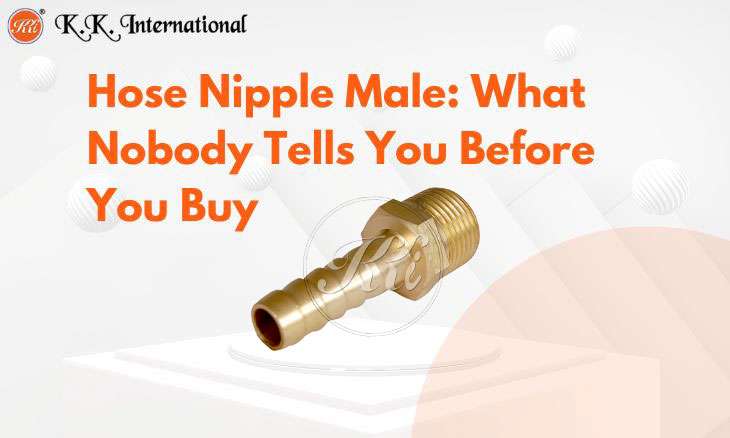
Stop Hose Connection Failures with the Right Hose Nipple Male
You connected a hose, everything looked fine, turned on the water or air supply and within minutes there's fluid spraying everywhere except where it's supposed to go. Or maybe it's a slow drip that keeps getting worse no matter how many times you tighten things. Or the hose keeps popping off at the worst possible moment.
Sound familiar?
Here's the honest truth: most hose connection failures aren't bad luck. They're not random. They happen for very specific reasons and nine times out of ten, the root cause is using the wrong fitting or a poorly made one.
The right Hose Nipple Male fitting changes all of that. But only if you understand what "right" actually means for your specific situation.
That's exactly what we're going to cover today.
Why Hose Connections Fail - The Real Reasons
Before we talk solutions, let's talk about why failures happen in the first place. Because if you don't understand the cause, you'll keep experiencing the same problems even after replacing your fittings.
Wrong Size Fitting
This is the number one reason hose connections fail and nobody wants to admit it. The fitting diameter doesn't properly match the hose internal diameter. It looks close enough. It goes on without too much trouble. But "close enough" in hose fittings means leaks, means pressure loss, means the hose eventually works itself loose.
A proper Hose Nipple Male fitting should require genuine effort to push the hose onto the barbed section. If it slides on easily with no resistance it's too small and it will fail under pressure.
Poor Thread Quality
The male BSP thread end connects to your valve, tap, manifold, or fitting. If those threads are poorly cut even slightly off-spec they won't engage properly with the female threads they're connecting to.
You tighten and tighten and it never quite feels solid. Or it goes on fine but leaks because the thread engagement isn't creating a proper seal. Both situations come from poor thread manufacturing.
Wrong Material for the Application
Plastic fittings in high-pressure applications. Cheap alloy fittings in corrosive environments. Fittings that weren't designed for the fluid or gas they're handling.
Materials matter enormously in hose fittings. The wrong material doesn't just fail sooner it can fail suddenly and dangerously, especially in pressurized systems.
Vibration and Movement
In industrial and workshop environments, systems vibrate. Hoses move. Equipment operates continuously for hours. Fittings that seem fine in static testing gradually work loose under these dynamic conditions.
Quality fittings with proper hose grip and secure thread engagement resist this. Cheap ones don't.
Overtightening During Installation
Counterintuitive but true: overtightening threaded fittings can cause leaks rather than prevent them. It damages threads, distorts sealing surfaces, and creates the exact gaps you're trying to avoid.
People overtighten because they don't trust their fitting. Which usually means they shouldn't trust their fitting because it's not manufactured properly.
What a Hose Nipple Male Actually Does
Let's make sure we're completely clear on what this fitting is and how it works because understanding the mechanism helps you install it correctly and troubleshoot if anything goes wrong.
A Hose Nipple Male fitting has two ends that work completely differently from each other.
The Barbed Hose End
One end has a series of ridges called barbs that the hose slides over. These barbs are specifically designed to grip the inside of the hose. As the hose tries to pull off under pressure, the barbs dig in slightly, actually increasing their grip.
The hose typically gets secured over the barbs with a hose clamp a jubilee clip that compresses the hose wall firmly against the barbed section. This combination of barb grip and clamp compression creates a connection that handles significant pressure without budging.
The barb diameter needs to be slightly larger than the hose's internal diameter for this to work correctly. That slight interference fit is what creates the seal.
The Male BSP Thread End
The other end has external BSP threads male threads that screw into a female BSP connection on your valve, tap, or system fitting.
This end creates a completely different type of seal a threaded seal assisted by PTFE tape or thread sealant. The threads engage mechanically, and the sealing compound fills any microscopic gaps in the thread engagement.
Two completely different sealing mechanisms working simultaneously. When both are done correctly, you get a connection that simply doesn't leak.
Why Brass Specifically - And Why It Matters More Than You Think
The KK International Hose Nipple Male is made from premium brass. This isn't just a traditional material choice or marketing language there are genuine practical reasons brass is the right material for hose fittings across most applications.
Corrosion Resistance in Real Conditions
Think about where hose fittings actually live. Garden irrigation systems exposed to soil, moisture, fertilizers. Industrial systems handling various fluids and chemicals. Plumbing connections inside walls and under floors where moisture is constant.
Brass resists corrosion in all these environments without surface treatments or coatings that can wear off. The corrosion resistance is inherent to the material itself. Twenty years from now, a quality brass fitting looks and performs essentially the same as when it was installed.
Cheap zinc alloy fittings often sold as brass alternatives corrode, pit, and eventually fail in these same environments. They look similar initially. They don't perform similarly long-term.
Dimensional Stability Under Pressure and Temperature
Brass maintains its shape and dimensions under pressure cycling and temperature changes. The barbed section stays at the correct diameter. The threads maintain their form. The body doesn't deform under system pressure.
This dimensional stability is what maintains your seal long-term. A fitting that changes shape under pressure or temperature creates gaps in connections that were initially leak-free.
Thread Quality That's Actually Achievable
Brass machines exceptionally well. This means BSP threads can be cut to precise tolerances consistently. Every fitting has threads that meet spec not most fittings, not the good batch, every fitting.
Consistent thread quality means consistent sealing. Consistent sealing means no leak surprises three months after installation.
Strength Without Brittleness
Brass is strong enough to handle the mechanical stress of installation and system operation, but it's not brittle. It can handle being tightened properly without cracking. It handles vibration without developing stress fractures. It takes the knocks and bumps of real-world installation without failing.
Some cheaper materials are hard but brittle fine under ideal conditions, but they crack or shatter when things get real.
What Happens When You Use the Wrong Fitting
Let me paint you a realistic picture of what cheap or wrong fittings actually cost you because the upfront price difference seems significant until you calculate total cost.
Immediate failure at installation Wrong size fitting, wrong thread, incompatible material. You've wasted time, need to return and replace, and the project is delayed.
Early failure after installation Fitting seemed fine, passed initial test, failed within weeks or months. Now you're doing the job twice, potentially dealing with damage from the leak, and buying new fittings anyway.
Ongoing performance issues Fitting technically works but leaks slightly. You add more PTFE tape, tighten more, check constantly. That constant attention has a real time cost that multiplies over months.
Damage from failures Water damage to surrounding areas, contamination from fluid leaks, production downtime in industrial settings. These costs often dwarf the cost of the fitting itself many times over.
Replacement cycles Cheap fittings need replacing. Quality brass fittings from KK International don't. The fitting that costs more upfront but lasts fifteen years costs dramatically less than replacing a cheap fitting every year or two.
The KK International Difference - Manufacturing Quality You Can Actually Feel
When you hold a KK International Hose Nipple Male fitting, the quality is immediately apparent.
The barb profile is consistent and sharp not rounded or uneven from poor machining. The barbs are spaced and sized correctly to grip the hose properly rather than just being decorative ridges.
The threads are cleanly cut and feel smooth when you thread them by hand onto a matching female connection. No catching, no roughness, no uncertainty about whether they're engaging correctly.
The brass finish is consistent and clean not pitted, not rough, not showing the inconsistencies that characterize fittings made from inferior brass or with poor manufacturing controls.
These aren't just aesthetic qualities. They directly determine how the fitting performs in actual use. Consistent barb profile means reliable hose grip. Clean precise threads mean proper sealing engagement. Quality brass means corrosion resistance that actually lasts.
You're not paying for the KK International name. You're paying for the manufacturing standards that make the fitting work correctly and keep working correctly for years.
Ready to Stop Dealing with Connection Failures?
If you've been through the frustration of hose connections that drip, leak, pop off, or need constant attention you already know the real cost of getting this wrong.
The right Hose Nipple Male fitting isn't complicated to choose or install. It just needs to be the right size, the right material, the right quality and installed correctly the first time.
The Hose Nipple Male from KK International: premium brass construction for genuine long-term corrosion resistance, precisely machined barbs for reliable hose grip, accurate BSP threading for leak-proof connections, and the manufacturing consistency that means every single fitting performs exactly as it should in household plumbing, industrial systems, hydraulics, pneumatics, and irrigation applications.


