
Hose Nipple vs Standard Coupling: What's the Real Difference
Walk into any hardware counter and ask for a fitting, and there's a decent chance you'll get handed something that technically works but isn't actually what you needed. Hose nipples and standard couplings get mixed up more than you'd think, mostly because they look similar enough at a glance and both end up doing roughly the same job in the end: connecting two things together so water, gas, or fluid can move through without leaking everywhere. But they're not interchangeable, not really, and knowing the difference saves you from redoing a job you thought you already finished.
So let's actually get into it. Not the textbook definition, just what matters when you're standing there deciding which one to grab.
Starting With the Basics
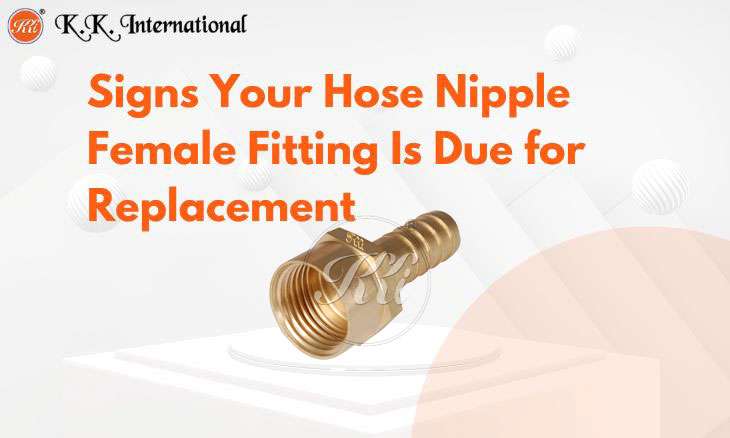
A hose nipple, like the Hose Nipple Female from KK International, is built specifically to connect a hose to a fixed point, whether that's a tap, a pipe, or another fitting. It's threaded internally, which is what makes it "female," and that threading is what lets it grip onto a male-threaded connection securely. The design is pretty focused. It's meant for hose work, and it does that one job well.
A standard coupling, on the other hand, is more of a general-purpose connector. Its whole reason for existing is to join two pipe ends together, usually of the same size and type, so a continuous line can keep running without interruption. No hose involved most of the time, just pipe to pipe.
That's really the core difference right there. One's built around hoses specifically. The other is built around extending or repairing straight pipe runs.
Where This Actually Matters on a Job
Here's where people get tripped up. On paper, both parts create a connection, so it's tempting to think either one could work in a pinch. In practice, that's usually a mistake waiting to happen.
If you're setting up an irrigation system, connecting a garden hose to an outdoor tap, or running water to equipment that needs a flexible line, a hose nipple is what you actually want. It's designed to handle the kind of movement and flexing a hose goes through, and the threading is built to create a tight seal specifically where hose meets fitting. Try using a standard coupling for this kind of job and you'll likely end up with a connection that either doesn't seal properly or just isn't compatible with the hose thread pattern to begin with.
Now flip that around. If you're extending a rigid pipe run, say you're adding length to a gas line or repairing a section of pipe that's cracked, a coupling is the right call. It's built for that straight, fixed connection, and using a hose nipple there would honestly be overkill at best and a poor fit at worst.
The Material Story Behind Both
Something a lot of buyers don't think about is that both of these parts are only as good as what they're made from, and brass tends to be the material that shows up again and again for good reason. It resists corrosion, it holds a tight seal under pressure, and it doesn't degrade the way cheaper metals or plastics do after a couple years of outdoor exposure or constant water contact.
Whether you're buying a hose nipple or a standard coupling, this is worth checking before anything else. A premium brass fitting, like the one KK International builds, is going to outlast a cheaper alternative by years, and that difference shows up fast if you're working with equipment that gets used daily.
It Doesn't Feel Tight Anymore
Grab it and give it a check by hand. A cap that's doing its job right should feel snug, not loose, not wobbly. Over enough time, with heat cycles and constant use wearing on the threading, that tight fit starts to give, even if nothing looks visibly wrong from the outside. It might pass a quick visual check and still be worn enough underneath to matter. If it doesn't feel right in your hand, trust that.
Thread Compatibility Is Where Things Go Wrong
This is probably the single biggest reason people end up with the wrong part. Hose fittings and pipe fittings don't always use the same thread standard, and BSP threading in particular trips up a lot of first-time buyers who assume "it looks close enough" is good enough. It isn't. A mismatched thread might screw on partially, seem fine for a minute, and then leak or blow apart under pressure once the system's actually running.
Before buying either one, it's worth confirming exactly what thread standard your existing hose or pipe uses. A five-minute check here saves you a return trip to the supplier and a wasted afternoon.
Which One Actually Handles Pressure Better
This depends more on the application than the part itself, but generally, standard couplings tend to be used in higher, more consistent pressure environments because they're joining rigid pipe that doesn't flex or move. Hose nipples deal with pressure too, especially in hydraulic or industrial hose setups, but they're also built to handle the added stress of a hose that bends, coils, and gets moved around regularly. A well-made hose nipple, with the right brass construction, holds up fine under that kind of repeated use, but it's worth mentioning because a lower-quality one won't.
Why Getting This Right the First Time Matters
A mismatched fitting doesn't always fail immediately. Sometimes it holds for a few weeks before a slow leak starts, or it works fine until pressure spikes and the seal gives out. Either way, it ends up costing more in the long run than just picking the correct part from the start would have. For contractors especially, that's the difference between a job that's done and a job you're revisiting a month later on your own dime.
If you're working with hoses in any capacity, residential, commercial, or industrial, a properly made hose nipple like the Hose Nipple Female from KK International gives you a leak-proof, corrosion-resistant connection built specifically for that job, not a general-purpose part doing double duty it wasn't really designed for.
Not sure which fitting fits your setup? Reach out to the KK International team directly, they can help you match the right part to your exact application before you buy.


