
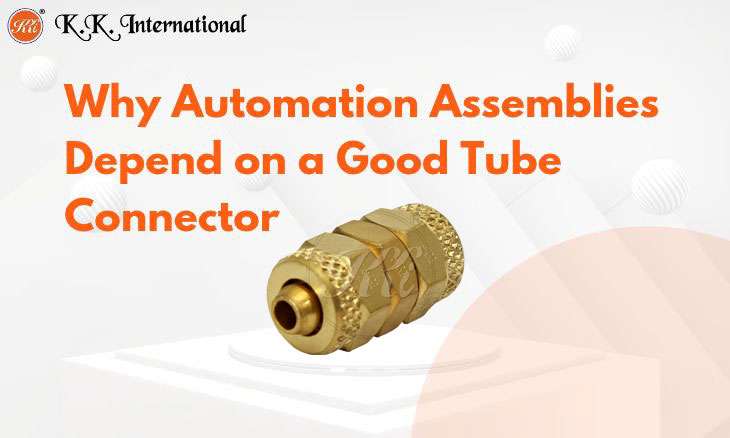
Equal P U Connector Assembly: What It Actually Solves
Pneumatic lines look dead simple from the outside. Tube goes in, air moves through, machine does its thing. But talk to anyone who's actually built or maintained one of these systems and they'll tell you the real headache almost never comes from the big components. It's the connection points. One weak joint between two tubes, and suddenly there's a pressure drop nobody can explain, not until someone finally traces it back to a fitting that was never quite right for the job in the first place.
That's the gap the Equal P U Connector Assembly from KK International closes. Not flashy, not something anyone's bragging about at a trade show. But it's genuinely one of those parts that quietly decides whether a pneumatic system runs clean for years or becomes a recurring headache.
Joining Equal-Size Tubes Without Losing Air
PU tubing is flexible by design, that's the whole point of using it in automation work. But that same flexibility is exactly what makes a clean, airtight join between two equal-size tubes trickier than it sounds. Push-fit connectors without tight tolerances tend to let tiny amounts of air sneak past the seal, and in a compressed air system, those tiny leaks pile up fast. Before long you're running your compressor harder than necessary just to make up for air escaping somewhere down the line.
This connector was built specifically for that problem. It's made for equal-size PU tube connections, and the fit's precise enough that you're not fighting a slow leak starting from day one.
Generic Fittings Create More Problems Than They Fix
A lot of pneumatic systems end up running on a patchwork of fittings, whatever was in stock, whatever was cheapest that week. Works fine, until it doesn't. Mismatched tolerances between tube and fitting are honestly one of the most common causes of pressure loss in automation builds, and almost nobody catches it right away. People check valves, check actuators, burn hours troubleshooting, and the actual leak's just sitting quietly at some connector joint the whole time.
Standardizing on a connector built specifically for equal-size tubes gets rid of that guesswork entirely. You know exactly what you're getting every time you install one, instead of crossing your fingers that some generic fitting happens to seal right on this particular batch of tubing.
Corrosion Is a Problem You Won't See Coming
Industrial environments aren't gentle on metal parts. Moisture, temperature swings, constant wear from daily use, it all adds up. And a fitting corroding on the inside doesn't always show it on the outside, so a connector can be slowly degrading for a while before anyone notices performance dropping off.
Brass handles this a lot better than the cheaper stuff. The Equal P U Connector Assembly uses corrosion-resistant brass precisely because industrial pneumatic systems need fittings built to last years, not months. That's not a minor spec on a datasheet either, it's really the difference between swapping connectors out constantly and basically forgetting they exist because they just keep doing their job.
Installation Time Adds Up Fast on a Production Line
On a production floor, time spent fighting with fittings is time the whole operation loses. A connector that needs careful alignment, extra tools, or some fussy multi-step install process slows down every single build, and across dozens or hundreds of assemblies, that drags.
This connector's built for quick assembly because that's a real cost in industrial settings, not just a nice-to-have. A fitting that goes in fast and seals right the first time isn't some minor convenience, it's actual labor and time saved across an entire production run.
Where It Actually Gets Put to Work
This isn't a one-application part. It shows up across industrial pneumatics broadly, automation assemblies where every single unit coming off the line needs the exact same reliable connection, and compressed air lines where leak prevention directly affects efficiency and cost. Basically anywhere equal-size PU tubing needs a connection it can trust, this is the kind of part that just quietly handles it.
What Getting This Wrong Actually Costs You
A leaking connector rarely causes some dramatic failure, and honestly, that's what makes it sneaky from a cost standpoint. It just drains efficiency slowly. Compressor works harder than it should. System pressure runs below spec. Nobody notices right away because nothing's technically broken, it's just quietly underperforming, which is a far harder thing to catch than an obvious failure would be.
Solving this at the connector level, before it turns into some mystery someone's chasing down months later, is really the whole point of this part. Small, cheap component compared to the cost of hunting pressure loss across an entire pneumatic system after the fact.
Looking for a reliable way to connect equal-size PU tubing in your pneumatic setup? Reach out to the KK International team, they can help you find the right fit for your system.


