
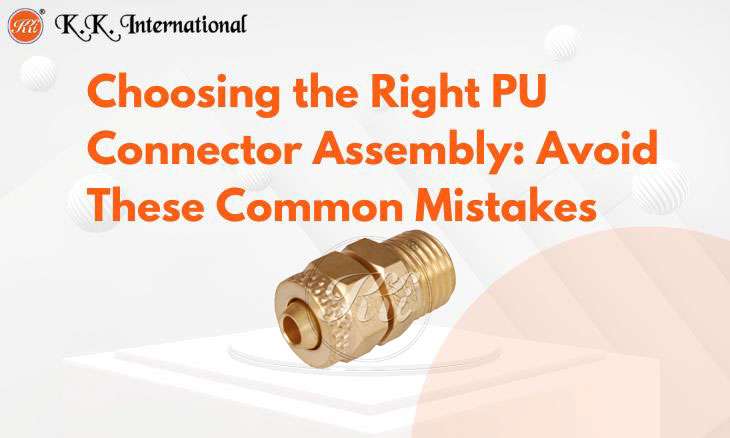
PU Connector Assembly: The Simple Fix for Frustrating Air Leaks
You hear it before you see it. That faint hissing sound somewhere in your pneumatic system. You walk around trying to locate it, maybe running your hand near suspected connection points, and there it is a tiny but persistent air leak at one of your tube connections.
Annoying, right? But here's the thing that small hiss is costing you more than you probably realize, and it's almost always coming from the same source: connectors that weren't built to actually hold a seal long-term.
Let's talk about why this happens and how the right PU Connector Assembly genuinely fixes it.
Why Pneumatic Systems Leak So Much
Compressed air is sneaky stuff. Unlike a water leak that you can see dripping, air leaks are often invisible and silent enough to go unnoticed for weeks or months. Meanwhile, your compressor keeps working harder to maintain system pressure, and you're paying for air that's literally escaping into the workshop instead of doing useful work.
Here's something that surprises a lot of people: a typical industrial facility loses somewhere between 20 to 30 percent of its compressed air output to leaks. That's not a small inefficiency that's a massive chunk of your compressor's energy output just disappearing.
And where do most of these leaks happen? At connection points. Tube fittings, connectors, joints anywhere two components meet is a potential leak source. The tubing itself rarely fails. It's almost always the connector.
What Makes a Connector Actually Fail
Let's get specific about why connectors leak, because understanding this helps you understand what you actually need to fix it.
Poor Tube Grip
PU tubing is flexible and somewhat soft compared to rigid pipe. A connector needs to grip that tubing securely enough that pressure inside the system doesn't push the tube back out. Cheap connectors often have weak gripping mechanisms maybe a simple compression ring that doesn't bite into the tube properly, or tolerances that are slightly off so the grip never fully engages.
Over time, with pressure cycling and vibration, that weak grip gradually loosens. What started as a solid connection slowly becomes a leak point.
Inconsistent Internal Dimensions
This one's less visible but equally important. Inside the connector, there are precise passages and seating surfaces that need to match your tube dimensions exactly. If manufacturing tolerances are loose, you get gaps. Gaps mean air finds a way through, even if the connection looks fine from the outside.
Material That Doesn't Hold Up
Some connectors use materials that degrade with exposure to compressed air system conditions moisture, oil mist from certain compressors, temperature variations. The connector might seal fine when new but starts failing within months as the material breaks down.
Vibration in Industrial Settings
Automation pipelines and industrial equipment vibrate constantly during operation. Connectors that seemed secure during installation can gradually work loose under this continuous vibration if they don't have a genuinely secure locking mechanism.
How the PU Connector Assembly Actually Solves This
The PU Connector Assembly from KK International is built specifically to address these failure points not through complexity, but through getting the fundamentals right.
Brass Construction That Actually Lasts
Brass handles the conditions inside pneumatic systems well. It resists corrosion from moisture in compressed air. It maintains its dimensional accuracy under pressure cycling. It doesn't degrade from typical compressor oil exposure the way some plastics or lower-grade metals might.
This matters because a connector that maintains its precise internal dimensions over years of use is a connector that keeps sealing properly over years of use. Material stability directly translates to long-term leak prevention.
Secure Gripping Mechanism
The connection mechanism is designed to actually hold PU tubing firmly — not just on day one, but through ongoing pressure cycling and the vibration of industrial operation. This is the difference between a connector that works initially and one that keeps working.
When you push the tube in, you should feel it seat properly and stay there. That secure grip is what prevents the gradual loosening that causes most connection failures over time.
Consistent Manufacturing Tolerances
Every PU Connector Assembly is manufactured to the same precise specifications. This means the internal passages, the sealing surfaces, the grip mechanism all of it stays consistent from one connector to the next. You're not getting lucky with some units and unlucky with others.
For anyone installing multiple connections across a system, this consistency means predictable performance everywhere, not just at the connections you happened to test carefully.
Where This Makes a Real Difference
Pneumatic Control Systems
Control systems depend on consistent air pressure to function correctly. Even small leaks can cause pressure fluctuations that lead to inconsistent operation actuators that don't fully extend, valves that respond sluggishly, sensors that behave unpredictably because the air supply isn't stable.
Reliable connectors throughout your control system eliminate this variable, letting the rest of your system perform as designed.
Industrial Equipment
Manufacturing equipment running on pneumatic power needs consistent force and timing. Pressure loss from leaking connectors directly affects equipment performance weaker clamping force, slower cycle times, inconsistent results.
Fixing connector quality throughout your equipment's pneumatic lines often resolves performance issues that seemed unrelated to air supply at first glance.
Automation Pipelines
Automated production lines run continuously, often unattended for periods. A leak that develops gradually might not get noticed immediately, slowly degrading system performance until something finally triggers attention usually a quality issue or unexpected downtime.
Using connectors built for long-term reliability reduces the chances of these slow-developing problems in systems where constant monitoring isn't practical.
Why This Matters for Your Bottom Line
Here's the practical reality: addressing air leaks at the connector level is one of the most cost-effective improvements you can make to a pneumatic system.
The PU Connector Assembly costs more than the cheapest generic option you'll find. But weighed against ongoing energy waste, performance issues, and the eventual cost of replacing failed connectors anyway quality components pay for themselves fairly quickly.
Workshops and facilities that standardize on reliable connectors throughout their pneumatic systems typically see noticeably reduced compressor running time and fewer unexplained performance issues in pneumatically powered equipment.
Ready to Stop Losing Air (and Money) to Leaks?
If you've been chasing mysterious pressure drops, dealing with that persistent hissing sound somewhere in your system, or just tired of replacing connectors that don't last the right components make this problem disappear.
The PU Connector Assembly from KK International: durable brass construction resistant to wear and corrosion, leak-proof jointing that maintains consistent air pressure, straightforward installation that doesn't require special tools, and compatibility with various PU tube dimensions for industrial and manufacturing applications.


