
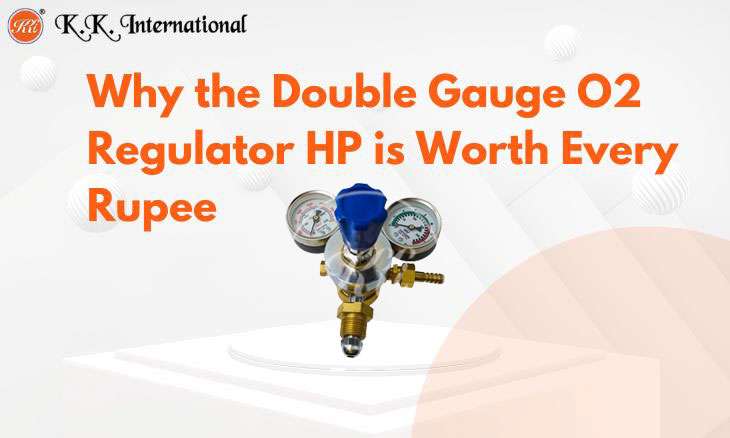
Double Gauge O2 Regulator HP: Where Safety Meets Performance
When was the last time you actually thought about your oxygen regulator? Not just glanced at it, not just assumed it was fine but actually thought about whether it's doing its job properly?
If you're like most welders and industrial operators, the honest answer is probably "not recently." You connect it, check that gas is flowing, and get to work. The regulator is just... there. Part of the setup you don't think twice about.
Here's the problem with that attitude: oxygen systems don't give you many second chances when something goes wrong.
The Thing About High-Pressure Oxygen Nobody Likes Talking About
Oxygen itself isn't flammable. But here's what it does: it makes everything else burn faster, hotter, and more intensely than you'd ever expect.
A leak in a high-pressure oxygen system isn't just wasteful. In a welding or cutting environment, where sparks are flying and heat is everywhere, an oxygen leak becomes genuinely dangerous. Fast.
And here's what makes it worse: oxygen leaks often aren't obvious. No dramatic hissing. No visible cloud. Just oxygen quietly enriching the atmosphere around your workspace, making every spark a bigger event than it should be.
Your regulator is the first line of defense against this. It controls the pressure coming out of your cylinder, maintains stable output for your equipment, and when it's working properly, keeps your system safe and predictable.
When it's not working properly? That's when problems start.
Why Most People Underestimate Their Regulator
I get it. Regulators look simple. There's a gauge, some knobs, connections on both ends. How complicated can it be?
Pretty complicated, actually.
A high-pressure oxygen regulator is managing serious pressure differentials. Your oxygen cylinder might be at 150 bar or more. Your welding or cutting equipment needs a fraction of that maybe 3 to 5 bar depending on the application. The regulator's job is to take that massive pressure and deliver controlled, consistent output.
Do that job with a poorly made regulator and you get pressure fluctuations that affect your work quality. Seals that degrade and leak. Gauges that give inaccurate readings. Components that can't handle the stress of high-pressure oxygen long-term.
Do it with quality equipment? Everything downstream works better. Your cuts are cleaner. Your welds are more consistent. Your workspace is safer.
What Makes the Double Gauge O2 Regulator HP Different
Alright, let's get into what actually sets this apart. And I'm going to be specific because "high quality" without explanation is just marketing noise.
Two Gauges: Why This Actually Matters
Single gauge regulators show you outlet pressure what's going out to your equipment. That's useful but incomplete.
The Double Gauge O2 Regulator HP shows you both inlet pressure (what's in your cylinder) and outlet pressure (what's going to your equipment) simultaneously.
Why does inlet pressure matter? Because it tells you how much oxygen you have left. No more mid-job surprises where your flame suddenly weakens because your cylinder ran low without warning. You can see it coming and plan accordingly.
But there's more than just cylinder monitoring. Watching both gauges together tells you a story about your system's health. If inlet pressure is stable but outlet pressure fluctuates, you've got a regulator issue. If both drop together, check your connections. The dual reading gives you diagnostic information that a single gauge simply can't provide.
For industrial operations where consistency matters and downtime is expensive, that information is genuinely valuable.
Brass Construction That's Actually Built for Oxygen Service
Here's something important that doesn't get mentioned enough: material selection in oxygen equipment isn't just about durability. It's about safety.
Certain materials react badly with high-pressure oxygen. Contamination, incompatible lubricants, wrong alloy choices these create hazardous situations in oxygen enriched environments.
The Double Gauge O2 Regulator HP uses brass that's appropriate for oxygen service. Properly selected, properly machined, properly finished for use with high-pressure oxygen systems.
That's not just marketing. It's a fundamental safety requirement that quality manufacturers take seriously and cheap manufacturers sometimes don't.
Leak-Proof Design in High-Pressure Service
"Leak-proof" sounds like standard marketing language until you're working with high-pressure oxygen and suddenly the concept becomes very real and very important.
The sealing design on the Double Gauge O2 Regulator HP is engineered for high-pressure oxygen service specifically. Not adapted from a general-purpose regulator. Not "probably fine for oxygen." Actually designed for this application.
Proper seals, correct torque specifications, appropriate connection standards everything comes together to create a system that doesn't leak under normal operating conditions.
And in oxygen service, "doesn't leak" isn't a bonus feature. It's the baseline requirement.
Smooth, Stable Output
Inconsistent outlet pressure is the enemy of quality welding and cutting work.
If your pressure fluctuates, your flame characteristics change. Your cuts become inconsistent. Your welds vary in penetration and quality. You spend time compensating for equipment variability instead of focusing on actual technique.
The Double Gauge O2 Regulator HP delivers stable output pressure. You set it, it maintains it. Your equipment gets consistent gas supply, which means consistent results from your work.
Real Workshop Experience
A fabrication shop owner I know upgraded his oxygen regulators about eighteen months ago. He was skeptical about whether it would make a noticeable difference they were already using decent regulators, just not dual gauge models.
The first thing his team noticed was the cylinder monitoring benefit. They stopped running low on oxygen mid-job because they could actually see cylinder levels dropping over the course of a shift.
The second thing: one of his welders noticed his flame characteristics were more consistent than before. Not dramatically different just more predictable and stable.
His assessment: "It's one of those upgrades where you don't realize how much the old equipment was limiting you until you switch."
That's the thing about quality equipment. Sometimes it doesn't transform your work dramatically. It just removes the subtle limitations you'd gotten used to working around.
Ready to Take Your Gas System Seriously?
If you've been running your oxygen system with whatever regulator came with your setup, if you're tired of pressure inconsistencies affecting your work quality, if you want the confidence that comes from knowing your gas system is actually reliable it's time to look at proper regulation equipment.
Your work quality depends on consistent gas pressure. Your safety depends on reliable equipment. Neither of those are areas where "good enough" is actually good enough.
The Double Gauge O2 Regulator HP from KK International: dual gauge monitoring for complete pressure visibility, brass construction engineered for oxygen service, leak-proof design for safe high-pressure operation, and stable output that gives your welding and cutting work the consistency it deserves.


