
Struggling to Fit a Valve in a Tight Spot? Here's the Solution
You know the feeling. You're crouched under a sink, or halfway inside a wall cavity with a flashlight in your teeth, holding a valve up against the space it's supposed to go into, and it just doesn't work. Too long, too wide, handle sticking out at an angle that makes zero sense once it's threaded on.
If you've done any real plumbing work, especially in older homes or anywhere with genuinely restricted clearance, this scenario probably isn't new to you. Most valves are built assuming there's plenty of room to work with, and real buildings don't usually offer that.
Why This Keeps Happening
Standard ball valves are sized for general-purpose use, which works fine when there's decent clearance. But that assumption falls apart the second you're working inside a cabinet, along a cramped wall cavity, or squeezed between two fittings that were already there before you showed up.
Sometimes you can technically get the valve threaded on, but there's no room left to actually turn a wrench, which defeats the whole purpose of getting it in there.
Forcing It Isn't a Real Fix
Even when you do manage to wedge a standard valve into a space it wasn't built for, that's rarely a lasting solution. A valve under constant physical stress tends to develop problems faster, seals wear unevenly, and operation gets stiff over time.
You end up back at that same spot in a year or two, except now you're troubleshooting a failure instead of just fitting a part. This isn't really a "you're doing it wrong" situation, it's a sizing problem built into the product itself.
The Actual Solution: Sizing Down Properly
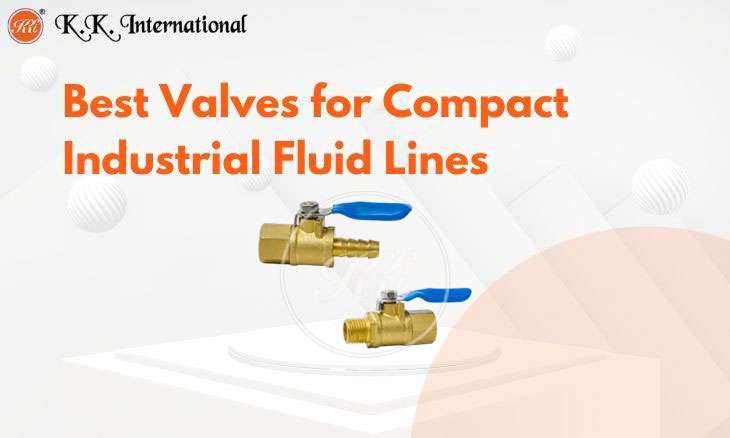
This is exactly where something like the Brass Mini Ball Valve from KK International earns its place. It's built specifically for small residential lines, compact industrial fluid runs, irrigation setups, and HVAC lines threaded through genuinely limited clearance.
The entire design philosophy behind it is fitting into spaces a standard valve just can't physically occupy.
Compact Doesn't Mean Weaker
Here's the part people usually worry about. Going smaller doesn't mean going weaker. This is still a full brass valve, built to handle real pressure and daily use, just packaged into a footprint that respects the space you're working in.
That assumption that "compact" automatically means "flimsy" doesn't really hold up with this one.
Less Material, More Room to Work
Less material simply means less space taken up. The compact body slots into cabinets, wall cavities, and cramped utility corners without forcing you to modify the surrounding structure just to create room.
That alone solves half the headache most people run into on these kinds of jobs.
Familiar Threading, Smaller Package
BSP threaded connections keep the installation process familiar, even in a smaller package. You're using the same tools and techniques you already know, just working with less room than usual.
That familiarity matters more than people expect when you're stuck in an awkward position trying to get a seal right.
Brass Still Means Long-Term Reliability
Because it's brass rather than some lighter alternative, corrosion resistance and long-term durability don't take a hit just because the size came down. That matters a lot specifically in tight spaces.
A valve buried behind a wall or tucked under a fixture is genuinely the last thing you want to be pulling apart for repairs every year.
Where This Actually Comes In Handy
This isn't a narrow fix for one specific type of job. It shows up in small residential plumbing runs, compact industrial fluid lines, irrigation systems, and HVAC or cooling setups where lines are routed through genuinely restricted spaces.
If you've ever redesigned part of an installation just to make room for a valve that shouldn't have needed that much space, this is exactly the kind of part that removes that problem.
Getting the Install Right
A compact valve still needs a proper installation, size doesn't change that part of the equation. Threading needs to be clean before assembly, and sealant or tape still matters just as much here as on a full-size valve.
Hand-tighten first, then finish with a wrench, being a little more careful since smaller valves can be more sensitive to overtightening.
Leave Room for Maintenance
Where possible, try to leave a bit of clearance around the valve for future operation or maintenance. Even in a genuinely tight spot, a valve you physically can't reach once it's installed doesn't really solve anything.
It just relocates the original problem into a slightly different form.
Why Getting the Size Right Pays Off
A valve that's actually the correct size for its installation performs noticeably better over the long run too. There's less stress on the connection points and generally smoother, more reliable operation since everything's sized appropriately from the start.
For contractors, this also means fewer callbacks down the road from a valve that was always going to cause trouble the moment it got squeezed into a space it didn't belong in.
Need a compact valve solution for a restricted installation? Reach out to the KK International team, they can help you find the right fit for your specific setup.


