
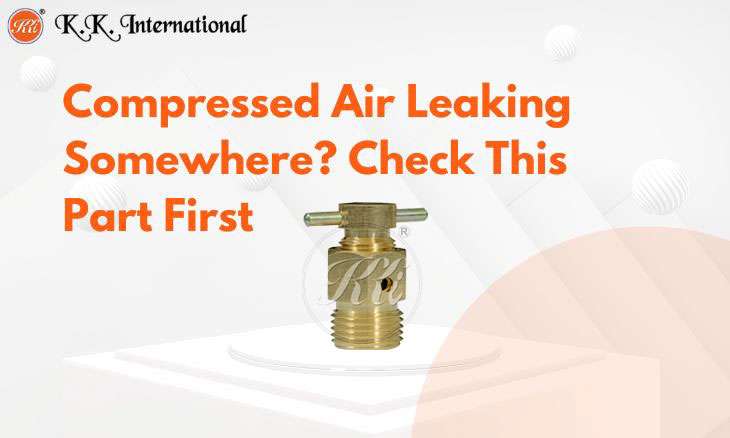
Air Compressor Losing Pressure? This Small Part Could Be Why
You check the tank, everything looks normal. You check the hoses, nothing obviously wrong there either. And yet somehow the pressure keeps dropping faster than it should, or it never quite reaches the level it used to hit without a struggle. Most people go straight to blaming the compressor itself at this point, assuming it's a motor issue or something expensive brewing under the hood. More often than you'd think, though, the actual problem is something a lot smaller and a lot cheaper: the air cock.
It's one of those parts that barely gets a second thought until it starts causing real trouble, and by then it's usually already cost someone a few wasted hours chasing the wrong fix.
What an Air Cock Actually Does in the System
An air cock is basically the control point for regulating airflow through a compressed air system. It's what lets you open, close, or fine-tune how much air is moving through at any given moment. Simple concept, but it's doing a lot of quiet, constant work every time that compressor runs. When it's functioning properly, you get accurate, dependable control over air pressure without even thinking about it.
The problem is, because it works so reliably most of the time, nobody really pays attention to it until it stops. And a worn or damaged air cock doesn't always fail dramatically. A lot of the time it just gradually gets worse, leaking a little more air here, sealing a little less tightly there, until one day the pressure drop is too obvious to ignore.
How a Small Leak Here Turns Into a Big Pressure Problem
Compressed air systems are only as strong as their weakest seal, and that's really the whole issue with a worn air cock. Even a small leak at this point in the system means the compressor has to work harder to maintain the same pressure output. Over time, that's not just an efficiency problem, it's added strain on the compressor itself, which can shorten its lifespan and drive up energy costs without anyone realizing why the bill went up.
What makes this frustrating is that the leak isn't always obvious. Sometimes there's a faint hiss you can hear if things are quiet enough. Other times it's so minor you'd never catch it just by listening, and the only real sign is that the system's pressure readings keep coming in lower than expected.
Signs the Air Cock Might Be the Actual Culprit
If pressure keeps dropping and you've already ruled out the obvious stuff, hoses, tank seals, connections, it's worth taking a closer look at the air cock itself. A few things tend to point directly at this part being the problem. If you notice the valve doesn't feel as tight or responsive as it used to when you're adjusting it, that's often an early sign of internal wear. Visible corrosion or discoloration on the fitting is another giveaway, especially if it's been in service for a long time in a high-moisture or high-use environment. And if pressure loss seems to get worse specifically when that valve is in use versus when it's fully shut, that's about as clear a signal as you're going to get.
Why the Material It's Made From Actually Matters Here
This is where a lot of the problem traces back to in the first place. Cheaper air cocks, especially ones not made from proper brass, wear down faster under the kind of constant high pressure and repeated use these systems put them through. Brass holds up because it resists corrosion, handles pressure fluctuations without warping, and keeps its seal integrity a lot longer than lower-grade alternatives.
A premium brass air cock, like the one from KK International, is built specifically to handle that ongoing stress without breaking down early. It's a small part of the overall system, sure, but it's exactly the kind of part where cutting corners on quality ends up costing more down the line in wasted air, energy, and eventually a full replacement anyway.
What Happens If You Just Ignore It
Here's the thing about a worn air cock, it rarely just stays the same. It tends to get incrementally worse the longer it's left alone, and the pressure loss that started as a minor annoyance eventually turns into a real operational problem. In industrial or commercial settings where consistent air pressure actually matters for the equipment running off that system, that gradual decline can start affecting output, tool performance, or overall efficiency without anyone immediately connecting the dots back to this one small valve.
It's a lot easier, and honestly a lot cheaper, to catch this early and swap the part out than to keep running a system that's slowly losing efficiency every week it goes unaddressed.
Ease of Installation Isn't Just a Convenience Thing
On a high-pressure system, installation quality directly affects how well the valve performs once it's live. A valve designed for straightforward, secure BSP connection reduces the chances of installation errors that create weak points down the line. This matters more in high-pressure environments than it does elsewhere, since even a small installation flaw that would be harmless at low pressure can turn into a real leak or failure point once the system's under real load.
Checking and Replacing It Without Overcomplicating Things
If you suspect this is the issue, start simple. Inspect the air cock for any visible wear, listen closely for leaks around the valve when the system's running, and check whether pressure readings improve noticeably when that section is isolated. If everything points back to this part, replacing it is usually a quick, straightforward job, especially compared to the alternative of troubleshooting a compressor that might not actually be the real problem at all.
Going with a reliable, properly built replacement matters here too. This isn't really the part to save a few dollars on, given how much it affects overall system performance.
Getting Ahead of the Problem Next Time
Once it's replaced, it's worth keeping an eye on this part periodically instead of waiting for pressure issues to show up again down the line. A quick visual check every so often, especially in systems that run daily or under heavy use, catches wear early before it turns into another mystery pressure drop a few months from now.
If your compressor's been underperforming and you've already ruled out the usual suspects, it might genuinely be worth checking this small, easy-to-overlook part before assuming the worst about the whole system.
Need a reliable air cock built to handle real industrial or commercial use? Get in touch with the KK International team, they can help you find the right fit for your compressor setup.


