
What Makes a Spray Gun Fitting Actually Leak-Proof
Ask any painter who's dealt with a mid-job leak, it's never just a small annoyance. One second you're laying down a clean coat, next second there's paint dripping off the hose connection, your pattern's gone sideways, and now you're stopping everything just to figure out where it's actually coming from. Nine times out of ten, it traces back to the same spot, the fitting joining hose to gun.
So what really separates a connection that holds up from one that quietly gives out a few weeks in? Not luck. And honestly, not just tightening it harder either. A few specific things decide whether a fitting actually seals or just looks like it does for a while.
It's the Material First, the Design Second
People assume leak-proofing is about clever engineering, some special thread shape or clever design trick. Mostly though, it comes down to the metal itself. Brass holds its shape under repeated pressure cycling in a way softer metals and plastic just can't keep up with. It doesn't warp when things heat up a bit during a long spray session, and it doesn't develop those tiny surface flaws over months that eventually let fluid sneak through.
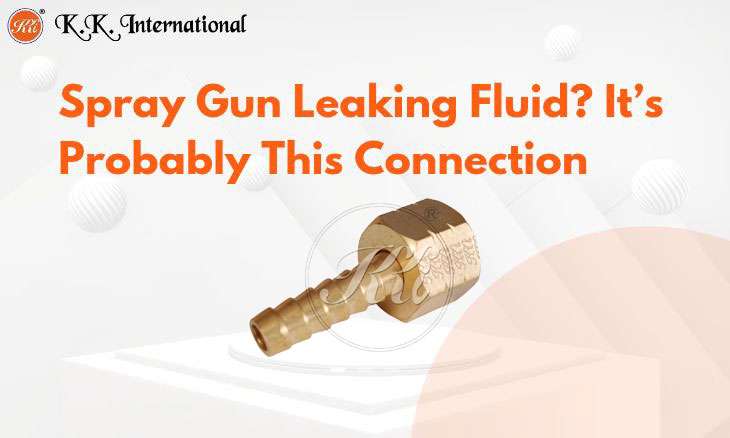
Cheap fittings can seal fine on day one, sure. Give it a few weeks of real use though, that's usually when things start showing. Something like the Spray Gun Nut Nipple Set from KK International gets built from premium brass for exactly this reason, that material just keeps its integrity long after a lesser one's already started failing quietly in the background.
Threading Precision Is the Part Nobody Checks
Here's something that gets missed constantly. Two fittings can look nearly identical, same size, same rough shape, and still seal completely differently depending on how precisely that threading was actually cut. Loose or inconsistent threading leaves tiny gaps, and fluid under pressure finds its way through those gaps eventually, even if it takes a while to show up.
You can't really judge threading precision by eye, which is part of why cheap, mass-produced fittings slide through unnoticed until they're already leaking on an actual job. A properly machined nut and nipple set grips evenly across the whole thread, no weak spots, nowhere for fluid to work its way through over time.
Even the Best Fitting Needs a Proper Install
Even a great fitting won't seal right if it's thrown together carelessly. Threads need to be clean before assembly, no leftover residue from a previous job hanging around, no debris sitting in the grooves. Skipping that step is a surprisingly common reason a brand-new fitting leaks right out of the box, and it's got nothing to do with the part itself being bad.
Hand-tighten first, then finish with the right amount of torque, that makes a real difference too. Overtighten it and you risk chewing up the threading, which ironically creates the exact leak path you were trying to avoid in the first place. Undertighten it and the seal just never forms properly to begin with. Narrow window, but hitting it consistently is what actually separates a leak-proof setup from one that's going to cause problems down the line.
One Good Fitting Doesn't Guarantee the Next Fifty
This one's specific to buying in any real quantity, but it matters a lot if you're a workshop or painter going through fittings regularly. One solid fitting doesn't mean the next fifty are built to the same standard, especially with lower-tier manufacturing where tolerances drift between batches without much warning. A supplier that keeps tight consistency across production runs is really the only way you get reliable sealing every time, not just when you happen to grab a good one out of the box.
Honestly, this is where a lot of painters get burned without ever realizing why. One fitting works perfectly, the next one from the same box leaks almost immediately, and the instinct is to blame bad installation when really it's inconsistent manufacturing happening behind the scenes.
What You're Spraying Through It Matters Too
Leak resistance isn't just about pressure, it's also about what's actually running through the fitting. Solvent-based coatings behave differently than water-based ones, and a fitting that holds up fine with one can wear down faster with the other if it wasn't built to handle both from the start. This is part of why versatility matters here, not as some marketing checkbox, but as a real factor in whether that seal holds up over months of actual use.
A fitting built to handle both solvent-based and water-based applications without breaking down gives you one less thing to worry about, especially if your shop switches between coating types often enough that it'd otherwise become a headache.
Why Any of This Actually Shows Up in Your Finish
A leak doesn't just waste material, it throws off your whole spray pattern. Even a small pressure loss at the connection point changes how the gun atomizes fluid, and that shows up as inconsistency in the finish, something most painters notice right away but can't always pin down the cause of immediately.
Getting the fitting right isn't really separate from getting a clean finish, it's the same equation, just earlier in the chain. A properly sealed connection keeps pressure steady from hose all the way to nozzle, and that's exactly what a smooth, even coat depends on.
Looking for a reliable, leak-proof fitting for your spray gun setup? Reach out to the KK International team, they can help you find the right fit for your specific equipment and coating type.


