
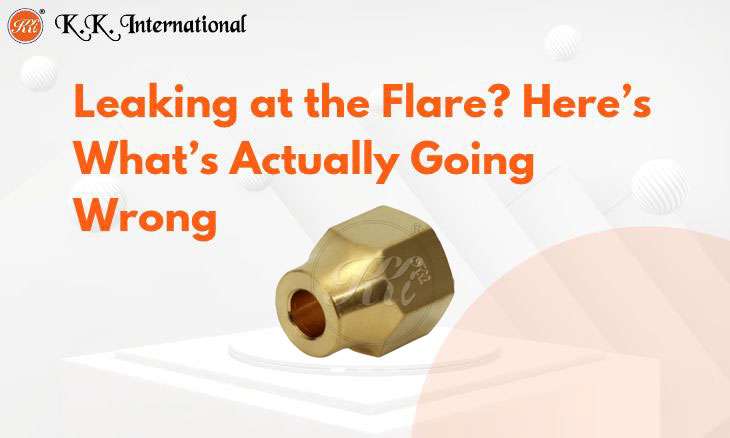
Flare Nut Long Neck: Built for Pipes Standard Nuts Can’t Reach
Every plumber has had that moment. You've got the pipe flared, the fitting's lined up, and the standard nut just stops short. Not enough thread engagement, not enough reach, or the nut bottoms out before it ever pulls the flare down tight. You stand there looking at it, and you already know it's going to be one of those jobs.
That's the exact gap a long neck flare nut was made to fill. It's not complicated and it's not flashy, but when you need one, nothing else really works. So let's talk about what it does, where it earns its keep, and how to tell when you're better off reaching for one instead of fighting a standard nut.
What Makes a Long Neck Different
A regular flare nut sits fairly short on the pipe. That's fine for most standard connections, where the flare and the fitting meet cleanly and there's plenty of room to work. A long neck version simply extends that body, so the nut can reach further down the pipe and hold the flare in position where a shorter nut can't.
The FLARE NUT LONG NECK from KK International is built exactly for that kind of setup. It's made for long neck flared pipe systems, and the extra length isn't just for show. It gives the nut something solid to grip, which is what lets the joint stay tight instead of slowly working loose over time.
The Situations Where Standard Nuts Fall Short
Most of the time, it comes down to the pipe itself. Some systems use long neck flared pipes by design, and a standard nut was never meant to seat properly on them. You can force it, sure, and plenty of people try. But a joint that's been forced rarely stays sealed, and you're usually back a few weeks later chasing a leak you thought was already fixed.
Other times it's a clearance thing. The flare sits deeper than usual, or the fitting body is built in a way that leaves a short nut hanging in the air with nothing to tighten against. In both cases, the long neck design solves a problem that no amount of extra torque will fix.
Why a Proper Fit Matters More Than Extra Tightening
There's a habit on a lot of job sites, and honestly it's an understandable one. If a flare joint leaks, tighten it more. Sometimes that works for a day or two. But a flare connection depends on the flare face seating evenly against the fitting, and overtightening a poorly matched nut can crush or deform that flare instead of sealing it.
A nut that actually fits the pipe style does the job with normal tightening. The seal comes from correct seating, not from brute force. That's the whole point of using the right part in the first place, and it's why a long neck nut on a long neck system tends to hold up far better than a mismatched standard one.
Brass Is Doing More Work Than You'd Think
The nut is brass, and that matters for more than looks. Brass handles repeated tightening without galling or seizing the way some cheaper metals do, and it stands up to moisture and everyday wear. In a plumbing or water distribution line, that means the nut isn't slowly corroding away behind a wall where nobody's looking.
For gas and hydraulic lines, the material matters even more. These are the places where a failing fitting isn't just annoying, it's a real problem. A solid brass nut gives you a connection you don't need to keep second-guessing, and that peace of mind is a big part of why contractors stick with brass year after year.
Where You'll Actually Use It
The range is wider than most people expect. Plumbing and water distribution is the obvious one, but gas and hydraulic pipelines use flared connections constantly, and industrial installations lean on them too because flares hold up well under pressure and vibration.
Whether it's a home, a commercial building, or a factory floor, the logic doesn't change. If the pipe system calls for a long neck flare, the nut needs to match it. That's really all there is to the decision.
A Few Tips Before You Install
Start with a clean, well-formed flare, because no nut can fix a cracked or uneven one. Check the flare face for scratches or burrs before you assemble anything, since a flaw there is the number one cause of leaks, far more often than the nut itself.
Thread the nut on by hand first so you can feel it seating properly, then tighten with a wrench until it's snug and firm. Don't go hunting for extra turns. If it doesn't seal at normal tightness, take it apart and look at the flare instead of cranking harder.
Why It's Worth Keeping a Few on Hand
Because this isn't a nut you can easily substitute, it's worth having some in stock if you regularly work with long neck flared systems. Running out mid-job and having to drive across town for the right piece is exactly the kind of delay you can avoid with a small stash.
A reliable brass fitting that's simple to install, resists corrosion, and gives you a tight seal on long neck pipes is the kind of part that quietly saves time on every job it touches. You won't notice it when it's working, and that's exactly how it should be.
Need the right flare nut for a tricky pipe setup? Reach out to the KK International team, they can help you match the fitting to your system before you start the job.


