
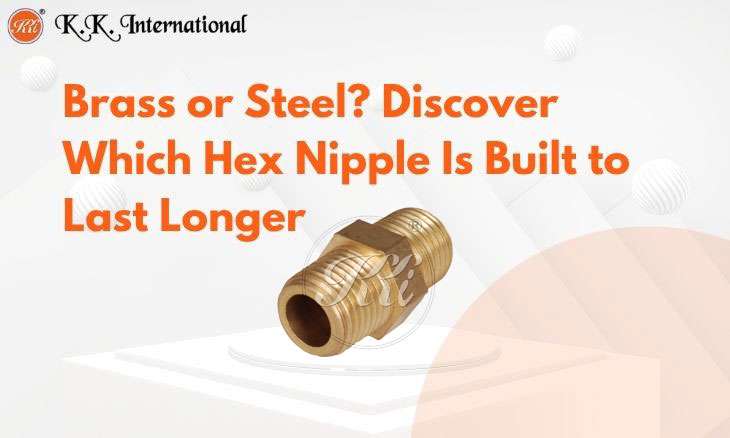
Brass vs Steel Hex Nipples: Which One Actually Lasts Longer
Ask five contractors this question and you'll get five different answers, all delivered with total confidence. Everyone's got a story about what worked for them, or what failed on them once and put them off a material for good. Fair enough, honestly. But when you actually sit down and look at how these two materials hold up over years of real-world use, it's really not that close.
Let's break down what actually separates brass from steel here, and why one tends to win out by a pretty wide margin once time gets involved.
Why People Even Argue About This
Hex nipples don't get an easy life. They're threaded connections under constant pressure, sitting there exposed to moisture, temperature changes, sometimes corrosive fluids depending on what's running through them. All that wear adds up very differently depending on what the fitting's actually made of.
That's the whole reason this brass-versus-steel thing never really dies down. It's not just people picking favorites for no reason, it genuinely changes how often you're back here replacing parts or chasing down a leak nobody saw coming.
Brass Just Doesn't Rust, Simple as That
Brass has this natural resistance to corrosion baked right in, no coating needed, no extra treatment required. Steel can't say the same unless you're adding something on top of it. Even in humid setups or systems running water and gas, brass doesn't rust the way steel does, mostly because there's no iron in it for oxidation to latch onto in the first place.
That resistance is really the whole ballgame. A solid brass hex nipple, something like what KK International puts out, can sit in a system for years without the threading eating away or the body corroding from the inside out where you can't even see it happening.
Where Steel Falls Apart
Steel's biggest weakness is exactly the thing brass sidesteps entirely, rust. Even galvanized or coated steel fittings wear down eventually, and threaded connections are usually the first place that coating gets scraped off during installation itself.
Once that protective layer's gone, corrosion moves fast, especially anywhere moisture's making regular contact with the fitting. That's typically the point where steel nipples start failing, sometimes years before a comparable brass fitting would even show the first sign of trouble.
Strength Sounds Like It Should Matter More Than It Does
People assume steel wins on pure strength, and technically that's true, steel does have higher tensile strength than brass on paper. But for hex nipples specifically, that advantage barely shows up in real use, because these fittings just aren't under the kind of extreme structural load where raw strength would actually make a difference.
What really decides lifespan here comes down to corrosion resistance and how well a fitting holds its seal year after year. And that's exactly the category brass wins, no contest.
What It Actually Costs You Over Time
Steel's cheaper going in, no argument there, and that's a big part of why it still gets picked for tighter budgets. But cheaper on day one doesn't always mean cheaper overall, not even close sometimes.
Factor in earlier replacements, more leak repairs, and the labor that comes with redoing a connection that failed sooner than it should have, and brass usually comes out ahead financially once you look past that first price tag.
Familiar Threading, Smaller Package
BSP threaded connections keep the installation process familiar, even in a smaller package. You're using the same tools and techniques you already know, just working with less room than usual.
That familiarity matters more than people expect when you're stuck in an awkward position trying to get a seal right.
Gas and Water Lines Are Where This Really Matters
For gas and water distribution specifically, this isn't just about how long a part lasts, it's a safety question too. A corroding fitting in a gas line isn't just annoying, it's genuinely risky, and brass's resistance to rust makes it the smarter, safer call for anything in that category.
Water systems run into similar issues, since constant moisture exposure is precisely the environment where steel starts breaking down first, usually faster than most people expect.
HVAC and Industrial Systems Feel This Difference Too
HVAC and refrigeration setups deal with temperature swings and condensation constantly, and both of those speed up corrosion in steel fittings over time. Brass just handles those conditions better, consistently, which is a big reason it's become the default choice for a lot of contractors working these systems.
Industrial piping, especially anything carrying hydraulic fluid or dealing with pressure that keeps shifting, benefits the same way. Brass keeps its seal tight without the threading breaking down the way steel tends to after enough pressure cycles.
So What Should You Actually Buy?
If cost is genuinely the only concern and the application's low-moisture and low-risk, steel can get by for a while, no denying that. But for anything touching water, gas, HVAC, or industrial fluid work, where longevity and a leak-proof seal actually matter, brass is the clear long-term winner here.
A solid brass hex nipple, like the one from KK International, isn't just built to shrug off corrosion, it's built to keep performing reliably for years without the maintenance headaches steel eventually brings to the table.
Not sure which material actually fits your project? Reach out to the KK International team directly, they'll help you land on the right material and size for whatever you're working on.


