
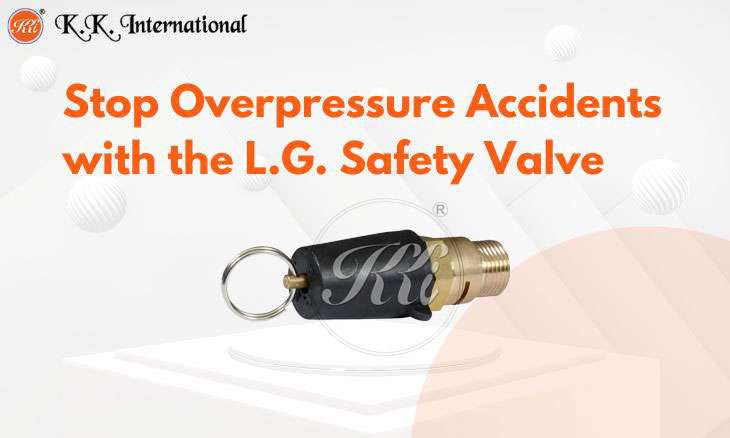
How the L.G. Safety Valve Protects Your Compressor
Funny thing about safety valves, nobody ever thinks about them. Not once. You could ask ten compressor owners when they last checked theirs and get ten blank stares back. It just sits there, quietly doing its one job, day in and day out, and that's kind of the whole problem with it. This part only gets noticed after something's already gone wrong, and by that point you're not just replacing a valve anymore. You're looking at real damage, maybe worse.
So let's talk about it properly for once. What this valve actually does, why it matters way more than people give it credit for, and how something like the L.G. Safety Valve (Plastic Cap) from KK International fits into keeping a compressor running the way it's meant to.
What This Valve Is Actually Guarding Against
A compressor's whole purpose is building pressure. That's the job. But pressure left unchecked isn't just an inconvenience, it's genuinely dangerous. Keep building past what the tank and system are rated for, and you're stressing seals, straining components, and in the worst cases, risking a tank failure that could seriously hurt anyone standing nearby.
That's exactly where this valve steps in. Pressure climbs past a set point, the valve opens, air gets released, and the system drops back to a safe range on its own. Nobody has to notice a gauge creeping up. Nobody has to react in time. It just does the job the second it's needed, no hesitation.
Why People Underestimate This Part
Here's what a lot of owners miss until it's too late. Compressors already have other safeguards built in, pressure switches, gauges, shutoff mechanisms, sure. But those are all electronic or mechanical systems, and systems like that can fail. They get miscalibrated. Sometimes they just don't respond fast enough when it counts. The safety valve doesn't have that problem. It's not waiting on a sensor to read correctly or a switch to trip on schedule. It's a direct, physical reaction to pressure itself, nothing standing in between.
Which is really why this small brass part ends up being one of the most important things on the whole machine, even though it's probably the last thing anyone thinks about.
How the L.G. Safety Valve Holds Up in Real Use
This valve's built with a solid brass body, and that's not just a durability checkbox, it actually changes how it performs over time. Brass takes repeated pressure cycling in stride in a way cheaper materials just can't keep up with, so the valve keeps responding accurately year after year instead of slowly drifting off and becoming less dependable.
The plastic cap plays into this too. It gives you a secure seal without turning installation or inspection into a whole production. No fiddly multi-part assembly to worry about, this thing is built to do one job and otherwise stay out of your way.
Pressure inside the system crosses the valve's rated threshold, it opens, releases the excess, then shuts again once things settle back into a safe range. And it can repeat that cycle over and over without losing accuracy, which matters a lot for a part that might only get truly tested once or twice across its entire working life.
What Actually Happens If You Skip This or Let It Fail
Let's be blunt about this part. A compressor running with a faulty or degraded safety valve, one that's no longer opening at the right pressure, is running without its real safeguard. Everything can look fine for weeks. Months, even. Right up until it doesn't. Pressure spikes happen for plenty of reasons, a stuck switch, sudden demand shifts, general wear elsewhere in the system, and when that happens, this valve is the only thing standing between a controlled release and a serious failure.
For workshops and industrial setups running compressors hard for hours at a time, this isn't the place to cut costs. A decent valve costs next to nothing compared to what a compressor failure runs you, not to mention the liability if an accident happens that a working valve would've stopped cold.
Where You'll Find This Valve Doing Work
This isn't strictly a workshop item either. The L.G. Safety Valve shows up across industrial pneumatic systems, commercial workshop compressors, and even HVAC setups, where overpressure protection matters just as much even though most people don't connect that with air conditioning equipment at all. Basically, anywhere pressure's being built and needs controlling, something like this needs to be in place, and it needs to actually work when the moment comes.
Since it's built to fit standard compressor models, swapping in a valve like this usually doesn't mean tearing your whole setup apart. It's a straightforward addition or replacement, not some big project.
Keeping It Working the Way It Should
Even a well-built safety valve isn't a completely install-and-forget part. Worth checking on it now and then, making sure it's still seated properly, no corrosion creeping in, nothing that might throw off how it responds under pressure. Especially true if your compressor's running often or under heavy load, since more cycles just naturally means more wear building up.
The upside is that a valve made from solid brass, like this one, is built to take that repeated use without breaking down the way weaker, cheaper versions tend to. Still, a quick look every so often costs you nothing and gives you peace of mind that the part protecting your whole setup is actually doing its job.
Why This Tiny Part Deserves More Attention Than It Gets
At the end of the day, a compressor is a machine built entirely around pressure, and pressure without something reliable watching it is a risk sitting there waiting to happen. The L.G. Safety Valve exists purely to take that risk off the table, quietly, automatically, without needing anyone to remember it's even there. That's honestly the mark of good safety equipment. Shows up exactly when it's needed and asks for nothing otherwise.
Running a compressor for workshop, commercial, or industrial work and haven't actually checked what safety valve's installed on it? Worth five minutes of your time to go find out. Small part. One of the most important jobs on the entire machine, though.
Looking to install or replace a safety valve on your compressor system? Reach out to the KK International team, they'll help you find the right fit for your setup.
Where This Valve Fits Across Different Systems
This isn't just a workshop part either. The L.G. Safety Valve works across a range of applications, including industrial pneumatic systems, commercial workshop compressors, and even HVAC setups where overpressure protection matters just as much, even if people don't always associate it with air conditioning equipment. Anywhere pressure is being built and controlled, this kind of safeguard needs to be in place, and it needs to actually work when called on.
Because it's designed to fit standard compressor models, swapping in a reliable valve like this one doesn't usually mean reworking your whole setup. It's meant to be a straightforward addition or replacement, not a project.
Why This Small Part Deserves Real Attention
At the end of the day, a compressor is a machine built around pressure, and pressure without a reliable safeguard is a risk waiting to happen. The L.G. Safety Valve exists specifically to take that risk off the table, quietly, automatically, and without needing anyone to remember it's there. That's really the mark of good safety equipment. It works exactly when it's needed and doesn't ask for attention otherwise.
If you're running a compressor for workshop, commercial, or industrial use and haven't checked what safety valve is actually installed, it's worth taking five minutes to find out. It's a small part, but it's doing one of the most important jobs on the whole machine.
Looking to install or replace a safety valve on your compressor system? Reach out to the KK International team, they can help you find the right fit for your setup.


