
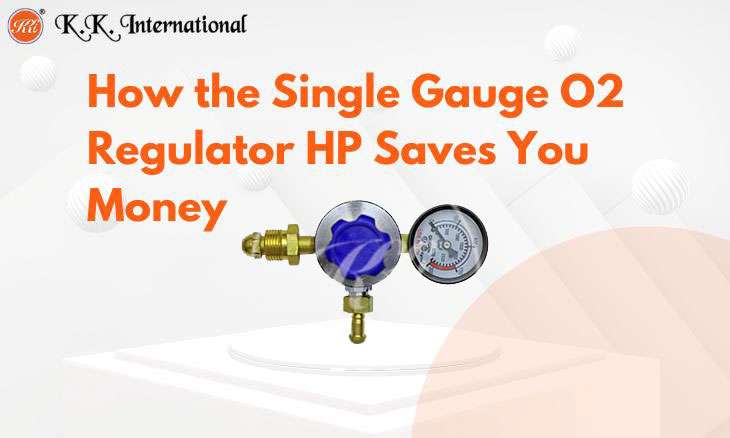
First Time Buying a Single Gauge O2 Regulator HP? Start Here
So you need an oxygen regulator and you're not entirely sure where to begin.
Maybe you're setting up a new welding station. Maybe your old regulator finally gave up after years of service. Maybe someone told you to get a "single gauge HP regulator" and you nodded confidently while internally thinking "okay but what does that actually mean?"
Whatever situation brought you here you're in the right place.
Because buying an oxygen regulator for the first time isn't like buying a wrench or a grinder. This is pressure equipment handling pure oxygen at high pressures. Getting it wrong isn't just inconvenient it can be genuinely dangerous.
So before you hand over your money, before you grab whatever's cheapest online, before you let someone talk you into something you don't fully understand read this first.
Why This Purchase Matters More Than You Think
Let me be straightforward about something most product guides dance around.
Oxygen regulators aren't just flow control devices. They're safety equipment.
Pure oxygen under high pressure is serious business. Oxygen itself doesn't burn, but it makes everything else burn faster and more intensely than you'd believe. A leak in a high-pressure oxygen system in a workshop environment isn't a minor inconvenience it's a genuine fire and explosion hazard.
Your regulator is the device standing between a full high-pressure oxygen cylinder and your working system. It controls that pressure. It maintains safe operating levels. It protects your equipment and everyone in your workspace.
This is why buying cheap, buying random, or buying without understanding what you're getting is genuinely not worth it here.
Okay. Now that we've covered why this matters let's actually help you understand what you're buying.
What a Single Gauge O2 Regulator HP Actually Is
First things first. Let's decode that name completely.
Single Gauge means this regulator has one pressure gauge rather than two. Some regulators have dual gauges one showing cylinder pressure and one showing delivery pressure. A single gauge regulator typically shows you the delivery pressure what's actually coming out and going to your equipment.
For many standard welding and cutting applications, a single gauge setup is perfectly sufficient and gives you the reading that matters most during actual work.
O2 obviously means oxygen. This regulator is specifically designed for oxygen service. This is not a generic gas regulator. Oxygen regulators are built and cleaned to different standards than regulators for other gases. Using the wrong regulator type with oxygen is a serious safety issue more on that later.
HP stands for High Pressure. This tells you the regulator is designed to handle the high pressures found in standard oxygen cylinders typically up to 150 bar or higher at the cylinder inlet — and reduce that to safe working pressures for your equipment.
Put it together and you've got a regulator specifically engineered for high-pressure oxygen cylinders, showing you delivery pressure with a single gauge, built for the demands of welding and cutting work.
Simple enough once someone actually explains it.
Single Gauge vs Dual Gauge - Which Do You Actually Need?
This is probably the first question that comes up when you're shopping, so let's settle it.
Single Gauge Regulator shows delivery pressure only the pressure going to your torch or equipment. You don't get a direct cylinder pressure reading, though experienced users can estimate remaining cylinder contents from delivery behavior.
This works perfectly well for most standard welding and cutting operations. You set your working pressure, you monitor it during use, you work efficiently. Many professional welders use single gauge regulators their entire careers without any issue.
Dual Gauge Regulator adds a second gauge showing cylinder inlet pressure essentially how full your cylinder is. Useful if you need to monitor remaining oxygen supply closely, useful for longer operations where running out mid-job would be a serious problem, useful in industrial settings where cylinder management is important.
So which do you need?
If you're doing standard workshop welding and cutting, running regular jobs where you can monitor your cylinder visually and refill regularly the Single Gauge O2 Regulator HP handles everything you need perfectly well.
If you're running extended industrial operations, working in environments where cylinder changes are difficult or disruptive, or managing multiple cylinders across a large operation dual gauge might be worth considering.
For most first-time buyers setting up a welding station single gauge is absolutely fine and actually what most professional welders use daily.
Understanding High Pressure - What HP Actually Means for You
Standard oxygen cylinders are filled to very high pressures. We're talking 150 bar, 200 bar, sometimes higher depending on the cylinder and fill.
That pressure straight from the cylinder would destroy your welding equipment instantly and create an extremely dangerous situation. Your torch, your hoses, your cutting attachment none of them are designed for cylinder pressure.
The regulator's entire job is taking that extreme inlet pressure and reducing it to safe, controllable working pressure typically somewhere between 1 and 4 bar depending on your application.
The HP designation tells you the regulator inlet is built to handle those high cylinder pressures safely. The internal components, the seals, the pressure rating of the gauge, the construction of the regulator body everything is engineered for high-pressure oxygen service.
This is not a place to substitute a lower-rated regulator and hope for the best. HP means HP for a reason.
Why Brass Construction Matters Specifically for Oxygen
You'll notice the Single Gauge O2 Regulator HP from KK International uses brass construction. This is actually critically important for oxygen service not just a material preference.
Here's something that surprises most first-timers: oil and grease are extremely dangerous in oxygen systems.
Pure oxygen reacts violently with hydrocarbons the stuff oil and grease are made of. In a high-pressure oxygen environment, contamination with even small amounts of oil or grease can cause spontaneous ignition. This is called oxygen enrichment combustion and it happens fast and violently.
Quality brass components for oxygen service are manufactured, cleaned, and handled specifically to prevent this contamination. The machining process, the cleaning procedures, the handling standards all of it is oriented around keeping oxygen service components free from contamination.
This is another reason why buying random cheap regulators for oxygen service is genuinely dangerous. You have no assurance of the manufacturing standards, the cleaning procedures, or the suitability for oxygen use.
KK International's regulator is built for oxygen service. That matters more than it might sound.
Beyond the safety aspect, brass handles the pressure cycling, temperature variations, and continuous use of professional welding environments without degrading. You're not replacing this every year. A quality O2 regulator properly maintained lasts a very long time.
What Makes the KK International Single Gauge O2 Regulator HP Worth It
You can find cheaper oxygen regulators. That's just a fact.
But here's what you're actually buying when you choose KK International.
You're buying consistent manufacturing quality. Every regulator meets the same standards not just the ones that happened to come out right on a random production day.
You're buying brass that's appropriate for oxygen service machined and handled correctly, not just brass that happens to be available.
You're buying gauge accuracy you can actually trust. When you set 2.5 bar delivery pressure, you're getting 2.5 bar. That consistency directly affects your work quality and your safety.
You're buying a product from a manufacturer that makes industrial gas fittings and components professionally not a side product from someone who mainly makes something else.
For a first-time buyer especially, starting with quality equipment means you're learning correct technique on equipment that behaves predictably. You're not compensating for equipment inconsistencies while simultaneously learning proper welding technique.
That actually matters more than most people realize when you're just starting out.
Ready to Buy with Confidence?
Buying your first oxygen regulator doesn't need to be overwhelming. Now you understand what the specifications actually mean, what to check before purchasing, how to set it up correctly, and how to use it safely from day one.
The Single Gauge O2 Regulator HP from KK International gives you accurate pressure monitoring, durable brass construction built for oxygen service, leak-proof performance for safe operation, and the reliability that professional welding and cutting work demands.


