
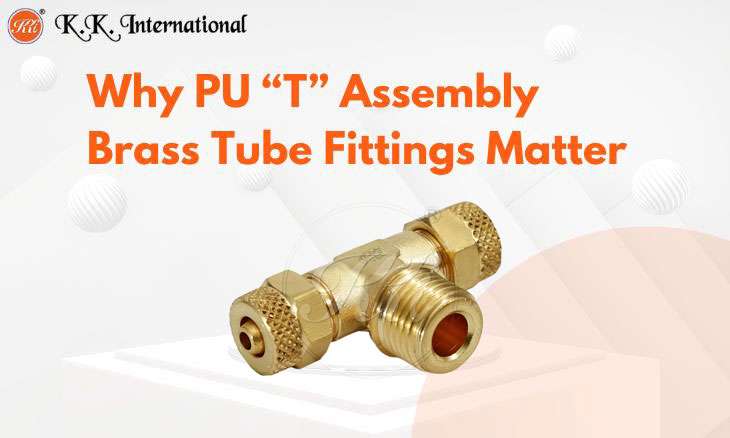
PU “T” Assembly Brass Tube Fitting for Air & Pneumatic Systems
The Unsung Hero of Pneumatic Networks
Picture this: you're in the middle of a production run, and suddenly one of your pneumatic tools starts losing pressure. You check the compressor it's fine. You check the main line no issues there either. The problem? A cheap plastic T fitting finally gave up after months of pressure cycling.
This scenario plays out in workshops and factories more often than it should. The reality is that your pneumatic system is only as reliable as its weakest connection, and those connection points especially where lines split take a beating.
What Makes a Good T Fitting Actually Good?
Not all T fittings are created equal, and the difference becomes obvious once you've worked with both cheap knockoffs and properly engineered brass versions.
The material matters more than you'd think. Brass isn't just chosen because it looks professional (though it does). It's selected because it handles the real-world conditions of pneumatic systems. Temperature swings? Brass adapts without cracking. Moisture in the air lines? Brass resists corrosion naturally. Constant vibration from machinery? Brass maintains its structural integrity.
Compare that to plastic fittings that might crack in cold weather or aluminum that can corrode when exposed to certain lubricants in the air stream. Brass just works, year after year.
Thread quality separates the winners from the also-rans. You'll notice the difference the moment you start threading a quality fitting. It goes in smoothly, grips securely, and creates a seal you can trust. Poor quality fittings might cross-thread, strip easily, or never quite seal properly no matter how much you tighten them.
Why Brass and PU Tubes Work So Well Together
Polyurethane tubing has become the standard in pneumatic applications for good reasons it's flexible without being flimsy, resistant to wear, and handles pressure well. Brass fittings complement these properties perfectly.
The hardness of brass provides a solid anchor point for PU tubes without crushing them. The smooth interior finish of machined brass fittings allows air to flow freely without turbulence that could create pressure drops. And the corrosion resistance of brass means you won't get flakes of oxidation breaking free and contaminating your air stream.
The Long-Term Perspective
Here's something that doesn't get mentioned enough: quality fittings are an investment that keeps paying off.
That cheap plastic T fitting might save you a few dollars today, but when it fails in six months and takes down half your production line until you can replace it, the real cost becomes clear. Meanwhile, a properly installed brass fitting can run for years—sometimes decades without issues.
I've seen brass fittings in industrial settings that have been in service for twenty years and are still going strong. They've outlasted the equipment they were originally installed to serve. That's the kind of reliability that lets you focus on running your operation instead of constantly maintaining your air system.


